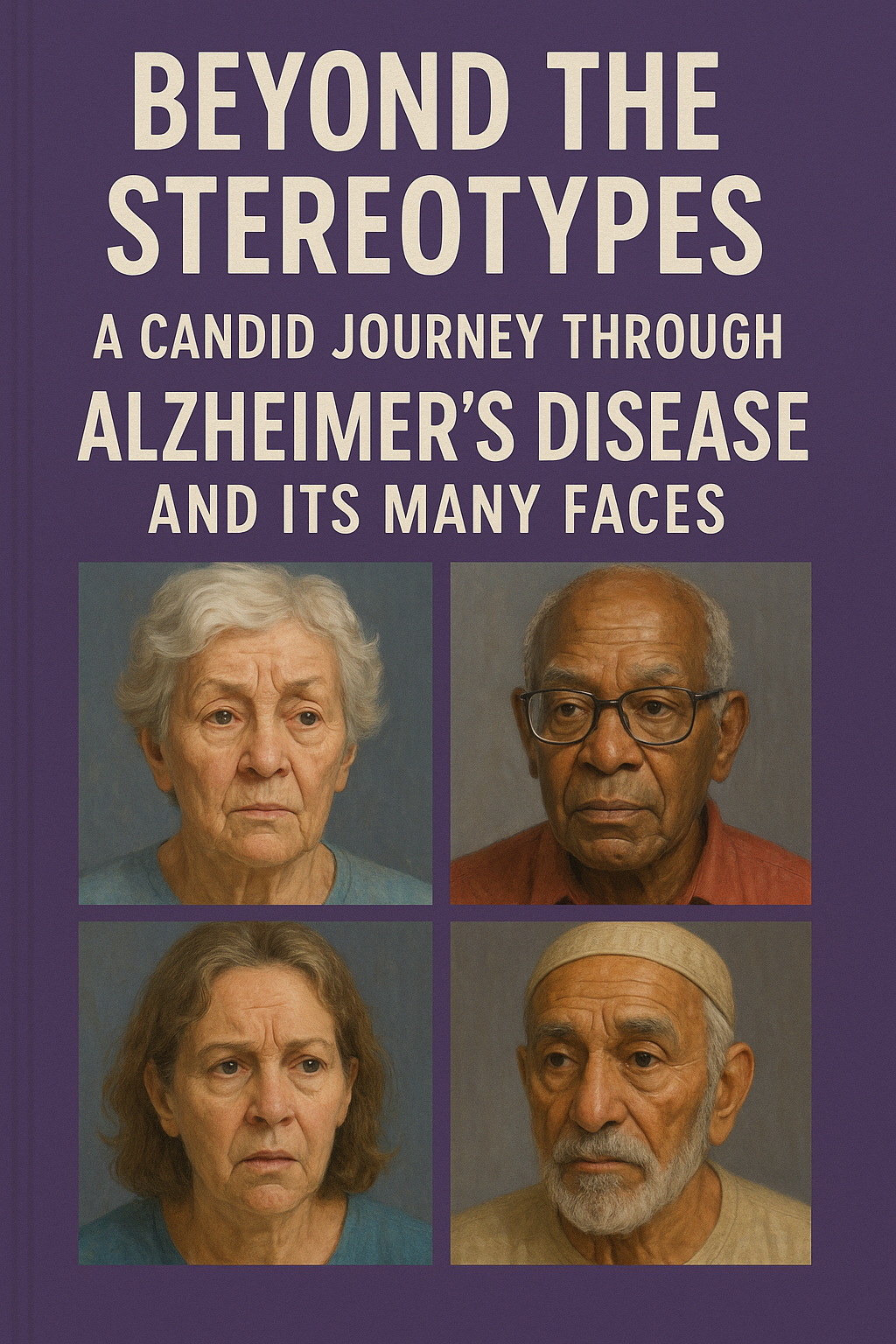
I’ll never forget the first time I met someone with Alzheimer’s. My neighbor, Mrs. Delacroix, had a knack for baking but—somewhere between stories of Paris and the timer beeping—she’d forget why she’d entered the kitchen. Her laughter about such moments was contagious, but behind it lurked anxiety. Those encounters taught me that Alzheimer’s isn’t just about memory loss; it’s a tapestry of subtle symptoms, stories, and scientific mysteries. So, let’s toss aside the stereotypes and explore Alzheimer’s disease, from its puzzling beginnings in 1901 to the modern day quest for clarity and compassion.
The Many Shades of Alzheimer’s: Clinical Syndromes You Might Not Expect
When most people think of Alzheimer’s disease, they picture an older adult struggling to remember names, appointments, or recent conversations. While memory loss is the most recognized symptom, it’s only one face of this complex neurodegenerative disease. In reality, Alzheimer’s disease clinical syndromes are varied, and the first signs can be far from what you might expect. Sometimes, the earliest clues are not about memory at all, but about how a person sees, speaks, or even behaves.
Memory Loss: The Classic but Not the Only Symptom
The most typical presentation of Alzheimer’s disease is what doctors call the amnestic syndrome. This means the main problem is with memory, especially short-term memory. People may forget recent events, repeat stories, misplace belongings, or ask the same questions over and over. As the disease progresses, they might even forget conversations that happened just minutes ago. Interestingly, memories from long ago often remain clear until later stages.
It’s easy to worry about our own forgetfulness. I remember once thinking my tendency to lose my keys was a sign of insight into Alzheimer’s—turns out, losing your keys isn’t the same as forgetting what keys are for. True cognitive decline in Alzheimer’s disease goes beyond simple forgetfulness; it’s about losing the ability to form new memories or understand the purpose of familiar objects.
Beyond Memory: Visual Processing Syndromes
Not all Alzheimer’s disease symptoms start with memory. In some people—often younger individuals in their 50s or early 60s—the first signs are visual. This is called posterior cortical atrophy (PCA), sometimes referred to as the “visual variant” of Alzheimer’s. Instead of forgetting names or dates, these patients struggle to make sense of what they see.
- They may get lost in familiar places, unable to navigate their own home or neighborhood.
- They might have trouble finding objects right in front of them, like milk in the fridge.
- Recognizing faces, even of close family, can become difficult.
- Simple tasks like setting a table or pouring a drink can be confusing because of problems judging space and size.
These patients are the least likely to not have insight of their disease, meaning…they are the ones that recognize the most that there is a problem going on. This awareness can lead to anxiety or depression, as they realize something fundamental has changed in how they experience the world.
Language and Frontal Lobe Syndromes: When Words and Behavior Change
Another set of Alzheimer’s disease clinical syndromes involves language. Some people develop what’s known as a language syndrome or primary progressive aphasia. The first signs here are trouble finding words, following conversations, or understanding speech. Over time, reading and writing can also become difficult.
There are also frontal lobe syndromes, where changes in personality, judgment, or behavior come before memory loss. Someone might become impulsive, lose their sense of empathy, or struggle with planning and organization. These symptoms can be confusing for families, who may not immediately connect them to Alzheimer’s disease.
The Spectrum of Cognitive Decline
Alzheimer’s disease is a progressive neurodegenerative disease, and its symptoms can appear in many forms. The journey often begins long before anyone notices, with subtle changes that may not interfere with daily life. This early stage is called mild cognitive impairment (MCI). People with MCI might notice changes in thinking or behavior, but they can still manage their daily activities independently. Not everyone with MCI will go on to develop dementia, and not all dementia is caused by Alzheimer’s disease.
Key Points to Remember
- Memory loss is only one face of Alzheimer’s disease—visual and language difficulties can be the first clues.
- Younger individuals can present with visual syndromes before memory issues arise.
- Symptoms can include misplacing belongings, repeating stories, getting lost, or emotional changes.
- Patients with posterior cortical atrophy struggle to navigate familiar spaces and recognize faces.
Since Alois Alzheimer first described the disease in 1901, our understanding has grown. Today, we know that Alzheimer’s can start with problems in memory, vision, language, or behavior. Recognizing these many shades of Alzheimer’s disease helps us support patients and families with compassion and clarity.
A Journey Through Time: Historic Cases and How Diagnosis Has Evolved
When most people picture Alzheimer’s disease, they imagine someone in their eighties, gradually losing memories. But the very first described patient, Auguste Deter, was just 51 years old—much younger than the stereotype. Her story, and the way her illness was first documented, marks the beginning of our understanding of Alzheimer’s disease and how its diagnosis has changed over time.
The First Case: Auguste Deter and Dr. Alois Alzheimer
On November 25, 1901, Carl Deter, a German office clerk, brought his wife Auguste to a mental institution in Frankfurt. He could no longer care for her at home. She had been struggling with memory loss for several years, but her symptoms went far beyond simple forgetfulness. Carl described her as having paranoid delusions—she believed he was unfaithful and that people were trying to kill her. She struggled to find words, had trouble speaking, and sometimes heard voices that weren’t there. Her behavior became unpredictable, and she seemed lost in her own world.
That night, a young physician named Alois Alzheimer, just 27 years old, examined Auguste. He wrote detailed notes about their conversation:
He asked her, “What is your name?” She answered, “Auguste.” Last name? “Auguste.” What is your husband’s name? “Auguste, I think.” When asked if she was married, she replied, “Yes, Augusta D.” When shown a pencil, she called it a pen. When asked again what it was, she said, “I don’t know. It’s difficult… so anxious, so anxious.”
These handwritten notes, filled with patient dialogue and observations, became the foundation for diagnosing Alzheimer’s disease. Auguste Deter’s case was unique not just because of her age, but also because Dr. Alzheimer paid such close attention to her words, her confusion, and her emotional state. She passed away in 1906, about five years after her admission. Dr. Alzheimer requested her brain for examination.
From Bedside Observation to Biomarkers and PET Scans
After Auguste’s death, Dr. Alzheimer examined her brain under a microscope. He described two key findings: what we now call neurofibrillary tangles and amyloid plaques. These are the classic pathological hallmarks of Alzheimer’s disease. As he wrote,
He described what we now know…as neurofibrillary tangles and amyloid plaques, which have become the pathologic hallmark of this disease.
It wasn’t until 1910 that the term “Alzheimer’s disease” was officially coined by another psychiatrist in a handbook of psychiatry. For decades, diagnosis relied almost entirely on careful observation, patient stories, and, eventually, post-mortem brain analysis. There were no blood tests, no scans, and certainly no talk of biomarkers. The process was deeply personal—built on handwritten notes, patient anecdotes, and the ability to notice subtle changes in behavior and memory.
Modern Diagnostic Testing: The Era of Biomarkers and PET Scans
A few years ago, I assumed that brain science was all about high-tech imagery and computers. But the truth is, handwritten notes and patient stories still matter. What’s changed is that today, we can combine those observations with advanced technology. Diagnostic testing for Alzheimer’s disease now includes fluid and imaging biomarkers, such as amyloid PET scans. These tests allow doctors to see amyloid plaques and tau tangles in the living brain—something Dr. Alzheimer could only dream of.
- Amyloid plaques and neurofibrillary tangles are now visible through specialized PET scans, providing direct evidence of disease in the brain.
- Alzheimer’s disease biomarkers in blood and spinal fluid can signal the presence of disease years before symptoms appear.
- Diagnostic testing for Alzheimer’s disease now blends clinical interviews, cognitive testing, and advanced imaging for a more precise and earlier diagnosis.
Modern medicine seeks nuance. We don’t just look for a single label; we try to understand the stage, the type, and the individual experience. PET scans and biomarkers have changed the game, but the heart of diagnosis still lies in listening to the patient’s story—just as Dr. Alzheimer did over a century ago.
Progression and Perception: From Mild Cognitive Impairment to Dementia, and the Unexpected in Between
When we talk about Alzheimer’s disease symptoms and the broader topic of cognitive decline, it’s easy to fall into the trap of thinking there’s a single, predictable path. The truth is much more complex—and often, more hopeful. The journey from mild cognitive impairment (MCI) to dementia is not a straight line, and it’s filled with unexpected turns, pauses, and even detours that challenge our assumptions about aging and memory loss.
Let’s start with the basics. Mild cognitive impairment is a clinical state where a person experiences a noticeable decline in thinking or behavior. This decline can be due to many causes, but in the context of Alzheimer’s disease, it means there are changes in memory, reasoning, or judgment that are greater than expected for age, yet not severe enough to significantly interfere with daily life. People with MCI might forget appointments or lose track of conversations, but they can still manage their medications, pay bills, shop, cook, and maintain personal hygiene. They remain independent, even if they—or their loved ones—notice something is different.
Dementia, on the other hand, is diagnosed when cognitive or behavioral decline becomes significant enough to interfere with a person’s independence. It’s not just about forgetting where you left your keys; it’s about losing the ability to manage finances, keep up with household tasks, or even remember to eat. As dementia progresses, individuals become increasingly reliant on family, friends, or professional caregivers for support in their day-to-day lives. The loss of independence is what truly separates dementia from MCI.
One of the most important things I’ve learned on this journey is that not every person who has dementia or MCI necessarily has Alzheimer disease. These terms—mild cognitive impairment and dementia—are clinical descriptions, not diagnoses of a specific illness. Many different conditions can cause cognitive decline, from vascular changes in the brain to medication side effects, depression, or even sleep disorders. That’s why a clear and thorough diagnosis is so important. It’s not just about labeling; it’s about understanding the underlying cause so that care and treatment can be tailored to the individual’s needs.
There’s also a common misconception—even among clinicians—that forgetting recent events always means dementia. In reality, we all have moments of distraction or forgetfulness, especially when we’re stressed or tired. The key difference is whether these lapses interfere with daily functioning. If someone is still able to live independently, manage their responsibilities, and adapt to new challenges, then what they’re experiencing may be mild cognitive impairment—or even just normal aging.
Another surprising aspect of cognitive decline is how early the journey can begin. Research shows that changes in the brain related to Alzheimer’s disease can start decades before any symptoms appear. This so-called “asymptomatic” phase is invisible to the person and those around them. It’s only later, when symptoms become noticeable, that the clinical labels of MCI or dementia come into play. This is why early diagnosis is so crucial—it allows for better planning, support, and intervention, potentially slowing the progression of symptoms and improving quality of life.
It’s also important to remember that not everyone with mild cognitive impairment will progress to dementia. Some people remain stable for years, while others may even improve, especially if the cause of their symptoms is identified and treated. For those who do progress, the transition is often gradual. Independence may be maintained for a long time before more serious decline sets in. And even within dementia, there are many different faces—some people experience changes in memory, while others struggle more with language, behavior, or movement.
Not every person who has dementia or MCI necessarily has Alzheimer disease.
In the end, the journey from mild cognitive impairment to dementia is deeply personal and rarely follows a predictable script. It’s shaped by genetics, lifestyle, medical history, and countless other factors. What matters most is recognizing the early signs, seeking a clear diagnosis, and building a support system that honors the individual’s strengths and needs. By moving beyond stereotypes and embracing the full spectrum of cognitive decline, we can offer hope, understanding, and dignity to those living with Alzheimer’s disease and its many faces.
Leave a Reply