Introduction
Hi, this is Peter from Anatomy Zone. This video is the first in a new series we’ll be producing on clinical conditions and their anatomical and pathological coralates. We will be taking a look in this video at the structure of the corona virus responsible for the current pandemic and how its structure causes its clinical manifestation. Corona viruses are a large family of common viruses which are found in humans and animals. Many cases of the common cold are due to a corona virus. They have caused two largecale outbreaks in the past two decades. The SARS virus in 2002 and the MS virus in 2012. It’s generally been considered that these corona viruses could cause future disease outbreaks because they’re known to be able to evolve within animals and then jump to humans via an intermediate host. In SARS, palm civets and raccoon dogs were identified as the intermediate. Co 19 is an example of this which is believed to have jumped from bats to panggalins to humans in a local seafood market in Wuhan, China during 2019. COVID 19 refers to the corona virus infectious disease found in 2019. The actual disease itself is referred to as COVID 19, but the virus is called the SARS COV 2, which stands for severe acute respiratory syndrome corona virus 2 and was named because its structure very closely resembles that of the SARS virus from 2002. This is the seventh known corona virus to infect humans. Two of which was similarly highly pathogenic, MS and SARS. The other four are of low pathogenicity and endemic in humans.
Structural Overview of SARS COV 2
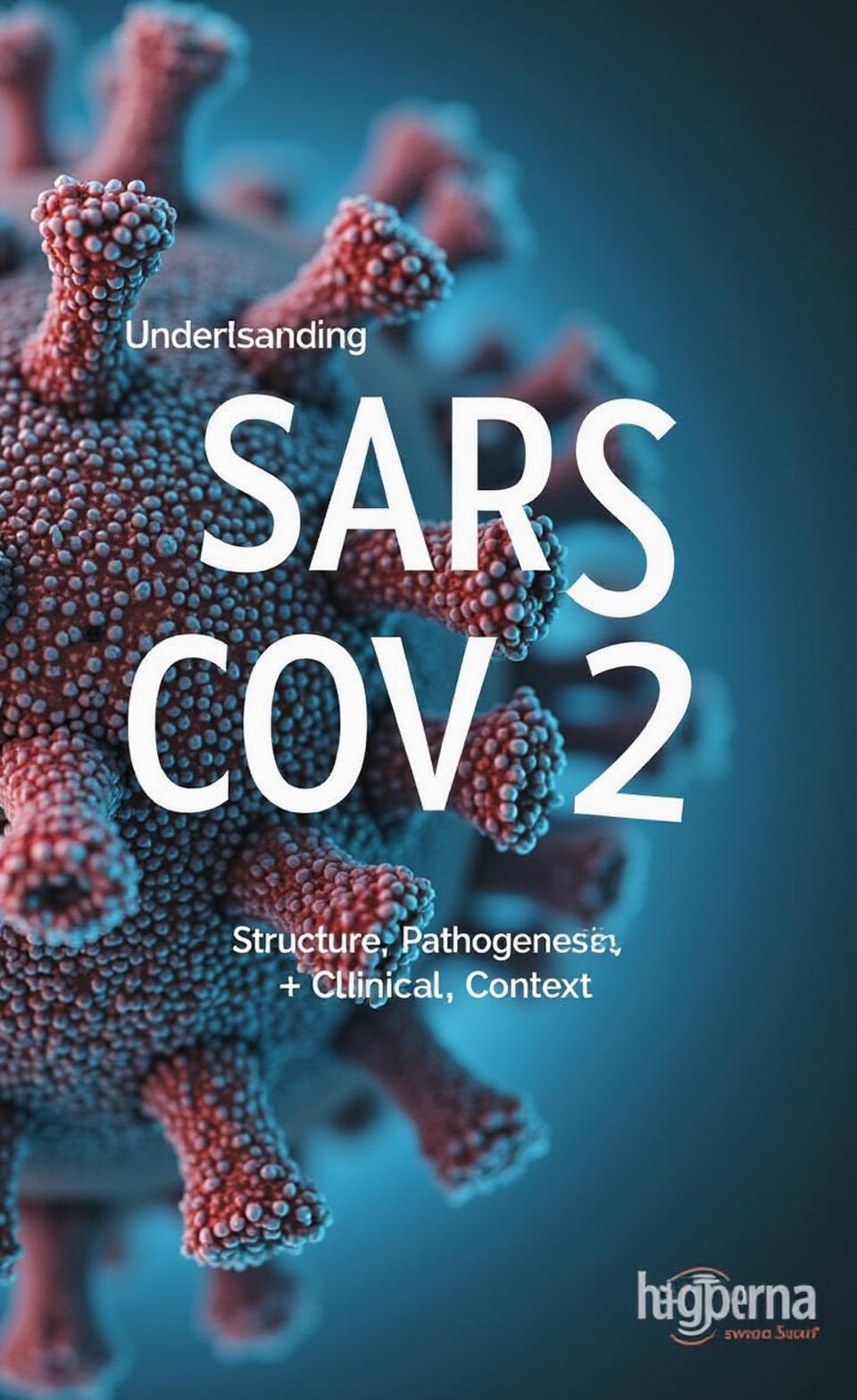
Let’s now take a look at the structure of the SARS COV 2 virus. So looking at this virus, we can see that it has a series of protein spikes on its surface which when viewed under a microscope appear like a crown which gives rise to the name corona which is Latin for crown and is therefore common to all the corona viruses. There are four structural proteins which is similar to other corona viruses. The S, the E, the M and the N proteins. The S stands for spike, the E stands for envelope, the M stands for membrane, and the N stands for nucleioapsid.
Spike (S) Protein and ACE2 Binding
So let’s take a look at these different structural proteins in turn. Beginning with this crown-like structure, which is the S or spike protein. This protein is responsible for allowing the virus to attach to the membrane of the host cell. It contains a receptor binding domain which recognizes a specific receptor, the angotensin converting enzyme receptor 2 which is expressed in the lungs, heart, kidneys and intestines. It has been shown that this protein binds to the ACE2 receptor with at least the same affinity and potentially as much as 20 times greater affinity than the SARS virus. This could be one of the explanations for the reasons why it’s spreading so easily. The spike protein itself has two functional subunits. S1 binds to the host cell receptor and S2 mediates the fusion of the viral and cellular membranes. Because of the critical role this protein plays in binding to target cells and cellular entry, it is a particular focus in the design of vaccinations and medical treatments for COVID 19.
Membrane (M) Protein
Let’s take a look at the next protein, the M or membrane protein. The membrane protein is the most abundant on the viral surface and defines the shape of the viral envelope. It can be thought of as the central organizer for corona virus assembly and interacts with the other structural proteins.
Envelope (E) Protein
Moving on to the E or envelope protein. This is the smallest of the major structural proteins on the viral membrane which appears to have several roles. We know that it is integral in the assembly and release of the virus from host cells and during viral replication it is largely localized at the site of intracellular trafficking. more specifically at the endopplasmic reticulum and the golgi apparatus. So essentially the M and E proteins play a critical role in turning the host cell apparatus into workshops where the virus and our own cells work together to make new viral particles.
Viral Envelope, Capsid, and Nucleocapsid (N) Protein
Underneath the surface proteins we have the viral envelope. This is the virus’s outer layer that is derived from the host’s cell membrane. So ourselves or the animals. It’s a fatty layer and worth noting that in contact with soap, it will break down, killing the virus. And this is the reason why handwashing with soap is so important to prevent the spread of this virus. Underneath this layer is what’s called the capsid. This is a protein shell that encloses the genetic material of the virus. Inside this capsid, we have the nucleo capsid or N protein. This protein is bound to the virus’s single strand of RNA, which is where all its genetic information is held to allow itself to replicate. The N protein appears to be multifunctional. In particular, it essentially inhibits a lot of the host cells defense mechanisms and assists the viral RNA in replicating itself and therefore in creating new viral particles.
Pathogenesis Foundations and Similarities to SARS
So we’ve looked now at some of the important structural features of the SARS Corona virus 2. A lot of our understanding of the pathogenesis of CO 19 comes from work on the original SARS virus. Because the viral structures and morphology are so similar, there is likely to be significant crossover in the biochemical interactions and pathogenesis.
Transmission and Early Infection
Let’s now look a little more at how the virus infects humans. So the virus is spread mainly by respiratory droplets, i.e. a cough or sneeze, which aerosolizes the virus, allowing it to travel into our nasal or oral cavities. We also know that it can live on surfaces for hours and even up to a few days on some surfaces. So, if you touch an infected surface, it’s very easy to then touch your own face and inoculate the mucous membranes in your eyes, mouth, or nose with the virus. Initially, it can get into the upper airway, so the nasal or throat area. And this is why you can get those symptoms like a common cold, stuffy nose, headache, sore throat, and fever. It is within the mucosal epithelium of the upper respiratory tract where primary viral replication is thought to occur. Similar to SARS, SARS corona virus 2 is able to get further into our respiratory system and into our lung epithelial cells where further viral replication occurs.
ACE2 Interaction and Cellular Entry
Let’s talk a little bit more about the ACE2 receptor interaction. The SARS corona virus 2 binds via its spike or S protein to the A2 receptor. This mechanism of binding is the same way that the SARS virus was able to bind to airway epithelial cells. The host cell has proteasis which are enzymes that break down proteins and these cleave the spike protein. We think that this process activates the protein in order to trigger the process of membrane fusion before injecting the viral genome into the host cell. A similar mechanism of protein cleaving facilitates cell entry in influenza as well as this mechanism of direct cellular entry. The virus may also enter the cell via endoccytosis. This is the process by which material enters a cell after being surrounded by an area of the cell membrane which then buds off inside the cell to form a vicle. Once inside the cell, virus specific RNA and proteins are synthesized within the cytoplasm. Further viral proteins are then assembled with the blueprint of information contained within the viral RNA using the host’s cellular machinery specifically the endopplasmic reticulum and golgi apparatus with specific processes to form the envelope glyoproteins. New virons are then assembled by fusing to the plasma membranes and released as vicles via the cellular exocitic secretary processes.
Inflammation, Symptoms, and Cough Mechanism
So the stresses placed on our own cells by viral infection and the interaction of our own immune system with the viral antigens presented by the infected host cells lead to cell death. During this process of cell death, multiple inflammatory mediators are released which creates an inflammatory response leading to a buildup of mucus and thickening and hyperplasia of the cells within our airways. This inflammation causes irritation of the cells lining our airways which leads to the cough.
Lower Respiratory Tract and Alveolar Impact
Let’s move further down into the lower respiratory tract now and see how the virus acts within the lungs. So to get there, let’s take a look at the path that the virus might take. So looking at the track here or the wind pipe, this branches into left and right main bronchi. These bronchi branch into lowbar bronchi. We have three on the right and two on the left. And these then branch into segmental bronchi. The segmental bronchi branch into bronchioles which terminate as respiratory bronchioles at the end of which are the alvoli. The alvoli are the tiny airfield pockets responsible for gas exchange. We have around 600 million of these alvoli and they are responsible for exchanging oxygen and carbon dioxide between the blood and the air we breathe in. Due to the direct action of the virus and also due to our own immune systems response to viral infection, the alvola walls can become inflamed and thickened and fill the alvolus with fluid which can impair their ability to exchange gases and this can lead to the symptom of shortness of breath.
Cytokine Storm and ARDS
In some people, this process of cellular infection by the SARS COV 2 virus can lead to an exaggerated immune response with a huge release of pro-inflammatory mediators causing what is known as a cytoine storm or cytoine release syndrome. Cytoines are small proteins involved in cell signaling and are crucial in mediating immune responses. This cascade of inflammatory mediators causes an uncontrolled systemic inflammatory response which leads to acute respiratory distress syndrome or ARDS. This is the rapid and widespread inflammation in the lungs which causes the epithelial and endothelial cells of the lungs to secrete inflammatory mediators which fill the alvoli. In addition, these inflammatory signaling cells recruit other cells of the immune system into the alvoli which further contributes to and amplifies the problem. Further, the systemic inflammatory state causes increased capillary permeability which results in even more fluid entering the alvoli. So essentially this is non-cardiogenic pulmonary edema compounding the problem. Overall, this pathological process severely impairs the ability of the lungs to exchange oxygen and carbon dioxide as it’s now become filled with fluid and inflammatory infiltrate. In cases of severe ARDS, invasive mechanical ventilation is required to adequately oxygenate the body. So that’s what underpins the pathology at the extreme end of the spectrum. In the large majority of cases of COVID 19 infection, the disease follows a mild course as the virus is eliminated via normal immune processes.
Imaging Findings
We will finish by taking a brief look at typical imaging findings. A chest radioraph may be normal in early disease, but when findings are present, we’ll typically demonstrate bilateral, peripheral, and basil airspace opacities. Plural eusions are rarely seen in COVID 19 infection. On CT as seen on these axial and coronal slices, typical findings are lower lobe predominant bilateral subplural ground glass density opacities. While these findings are frequently seen in COVID positive patients, these are not specific. The differential for these appearances includes other viral pneumonas, interstitial lung diseases such as cryptogenic organizing pneumonia and atypical bacterial pneumonas.
Conclusion
So that completes this video on the structure and pathogenesis of the SARS COV 2 virus.
Would you like me to convert these headings into H2/H3 tags or keep them as plain text?
Leave a Reply