Blog

  • Pharmacology of Heart Failure Treatment

    Pharmacology of Heart Failure Treatment

    Introduction
    In this lecture we re gonna cover the pharmacology
    of drugs used in treatment of heart failure, so let s get right into it. Heart failure is simply defined as a chronic,
    progressive disorder in which the heart muscle is unable to pump enough blood to meet the
    body’s needs. In a normal heart, the upper chambers called
    the atria and the lower chambers called the ventricles squeeze and relax in turn to move
    blood through the body.

    Cardiac Blood Flow: Four Major Steps
    Now blood flows through the heart and lungs
    in four major steps. First, the oxygen-poor blood that has already
    circulated through the body is received by the right atrium, which in turn pumps it over
    to the right ventricle. Secondly, the right ventricle pumps the blood
    through the pulmonary artery into the lungs, where it picks up oxygen. Thirdly, the pulmonary vein empties oxygen-rich
    blood, from the lungs into the left atrium, which in turn pumps it to the left ventricle. And finally the left ventricle pumps oxygenated
    blood through the aorta to the rest of the body.

    The Frank-Starling Law and Heart Failure
    Now, the Frank-Starling law of the heart is
    a basic physiological principle that describes how the heart is able to move blood through
    the body in a regulated way by pumping out as much blood as it receives. Specifically, this law states that increased
    filling of the ventricle results in greater contraction force and thus a rise in the cardiac
    output. In heart failure however this mechanism fails,
    as the ventricle is loaded with blood to the point where heart muscle contraction becomes
    less efficient.

    Types of Heart Failure: Systolic vs Diastolic
    Now, depending on the primary cause, heart
    failure can manifest itself as either systolic or diastolic dysfunction. In systolic heart failure the heart muscle
    becomes weak and cannot squeeze as much blood out. Poor ventricular contractility leads to reduction
    in the amount of blood pumped out of the ventricle, which we refer to as ejection fraction. While the normal ejection fraction can range
    between 50 and 75%, heart failure due to systolic dysfunction is typically associated with an
    ejection fraction of less than 40%. For this reason the systolic heart failure
    is most commonly referred to as Heart Failure with Reduced Ejection Fraction (HFrEF). On the other hand, in diastolic heart failure
    the heart squeezes normally, but becomes stiff and cannot adequately relax to allow for normal
    ventricular filling. As a result, patients with diastolic heart
    failure have relatively normal ejection fraction although stroke volume and cardiac output
    are reduced. Because of this, diastolic failure is most
    commonly referred to as Heart Failure with Preserved Ejection Fraction (HFpEF).

    Compensatory Mechanisms in Heart Failure
    Now, in the presence of heart failure, in
    order to counteract the effect of falling cardiac output and thus reduced perfusion
    to vital organs, the body will try to compensate via two tightly regulated mechanisms. The first one involves the increase in sympathetic
    nervous system activity. In the face of a reduced cardiac output, the
    arterial baroreceptors located in the aortic arch and carotid sinus will sense changes
    in blood pressure leading to the release of norepinephrine that in turn stimulates beta-1
    receptors located in the SA node, myocardium and the ventricular conduction system. Stimulation of these receptors increases heart
    rate and cardiac contractility leading to greater stroke volume. Because heart rate and stroke volume are components
    of cardiac output, which is simply equal to the product of the two, when they both increase,
    cardiac output will also increase to maintain adequate blood pressure and thereby perfusion
    to vital organs. Moreover, increased sympathetic nerve traffic
    to the kidney also activates ?1-adrenergic receptors located on juxtaglomerular cells
    causing them to release an enzyme responsible for regulation of blood pressure and volume
    called renin.

    Renin-Angiotensin-Aldosterone System (RAAS)
    And this brings us to the second major compensatory
    mechanism, which involves activation of the renin angiotensin aldosterone system. So, in addition to sympathetic nerves directly
    stimulating renin secretion via ?1 receptors, the release of renin from the juxtaglomerular
    cells is also regulated by two other primary mechanisms which are; the renal vascular baroreceptors
    that stimulate renin secretion in response to low renal perfusion pressure, and the macula
    densa cells of the distal nephron that stimulate renin secretion in response to fall in sodium
    chloride concentration. Now once released into the blood, renin acts
    upon a circulating substrate that is primarily supplied by the liver called angiotensinogen
    to produce angiotensin I. On passing through the pulmonary circulation
    angiotensin I is converted into angiotensin II by another enzyme, which is abundant in
    the lungs called angiotensin-converting enzyme (ACE for short). Now, circulating angiotensin II exerts its
    action by binding to various receptors throughout the body with most of its effects being mediated
    via angiotensin II type 1 receptor (abbreviated as AT1). These include stimulation of AT1 receptors
    in the endothelium of systemic arterioles, which leads to vasoconstriction; stimulation
    of angiotensin receptors in the brain, which causes the pituitary to release antidiuretic
    hormone (ADH for short), which in turn binds to specific vasopressin II receptors in the
    collecting ducts of the nehpron and promotes reabsorption of water back into the circulation;
    and finally, angiotensin II also acts on the angiotensin receptors in the adrenal cortex
    to stimulate the release of a steroid hormone called aldosterone, which in turn binds to
    nuclear mineralocorticoid receptor within the cells of the distal tubule and the collecting
    duct where it increases expression of genes that encode epithelial sodium channels and
    the sodium/potassium pump (Na/K ATPase) thereby promoting sodium and water reabsorption and
    potassium secretion causing increase in plasma volume and blood pressure. Furthermore, vasoconstriction and fluid retention
    elevates venous and capillary hydrostatic pressures, forcing additional fluid out of
    the blood into the tissue leading to edema particularly in the feet and legs. The increased peripheral resistance and greater
    blood volume also place further strain on the heart and accelerate the process of damage
    to the myocardium leading to structural cardiac remodeling.

    Natriuretic Peptides and Counter-Regulation
    At this point, in the final attempt to maintain
    circulatory system homeostasis, the body will try to counterbalance overstimulation of the
    renin angiotensin aldosterone system (RAAS) and sympathetic nervous system by activating
    cardioprotective natriuretic peptides. Specifically, in response to increased myocardial
    stretch and volume overload, atria begin to secrete A-type natriuretic peptide (ANP) and
    ventricles begin to secrete B-type natriuretic peptide (BNP), and in response to increased
    levels of pro-inflammatory mediators resulting from cardiac injury, vascular endothelial
    cells begin to secrete C-type natriuretic peptide (CNP). Now the main role of these natriuretic peptides
    is to counter the effects of volume overload and adrenergic activation by stimulating sodium
    and water excretion, promoting myocardial relaxation, inhibiting cardiac hypertrophy
    and fibrosis, suppressing sympathetic outflow, and stimulating vasodilation. However, in the end, even this counter response
    is not enough to save the failing heart. As heart failure advances, further activation
    of the renin angiotensin aldosterone system and the sympathetic nervous system ultimately
    overcomes the short-lived beneficial effects of the natriuretic peptides.

    Transition to Treatment
    And this brings us to the second part of this
    lecture that is the treatment of heart failure. Now the pharmacological management of patients
    with heart failure is complex and may require the use of several classes of drugs. So now let s discuss these one by one starting
    with beta-blockers.

    Beta-Blockers
    So beta-blockers work by binding to beta-1
    receptors in the heart and subsequently blocking the action of norepinephrine thereby reducing
    heart rate and contractility which in turn decreases cardiac output and blood pressure. As a side note here, keep in mind that decreased
    heart rate allows more diastolic filling time so the stroke volume is typically not reduced.
    Now, similarly via blockade of the ?1 receptors
    of the renal juxtaglomerular complex, certain beta-blockers may also reduce renin secretion,
    thereby reducing the severity of angiotensin II-induced vasoconstriction as well as aldosterone-induced
    volume expansion. It s important to remember that this however
    is not beta-blockers primary mechanism of action. Among several beta-blockers on the market,
    currently only three have proven to reduce mortality in heart failure patients; these
    are Bisoprolol, Carvedilol, and Metoprolol. Out of these three, Carvedilol has a unique
    pharmacological property in that it not only blocks beta-1 receptors in the heart but also
    alpha-1 receptors located on the smooth muscles of arteries and veins. By preventing norepinephrine from activating
    the alpha-1 receptor, Carvedilol causes vessels to dilate thereby reducing total peripheral
    resistance.

    ACE Inhibitors
    All right, moving on to the next class of
    drugs for heart failure that is angiotensin-converting enzyme (ACE) inhibitors. Drugs in this class selectively inhibit the
    angiotensin-converting enzyme, which in turn reduces angiotensin II production and its
    effects on vasoconstriction as well as ADH and aldosterone secretion. In addition to this, inhibition of ACE, increases
    levels of a potent vasoactive peptide called bradykinin. Unlike angiotensin II, which is a vasoconstrictor,
    bradykinin is an endogenous vasodilator, which is normally degraded by ACE. So when ACE inhibition occurs, while angiotensin
    II levels drop, bradykinin levels rise. As a result the blood vessels become dilated,
    total peripheral resistance is reduced and blood pressure is lowered thereby reducing
    the effort needed to pump blood around the body. Drugs in this class include Captopril, Enalapril,
    Fosinopril, Lisinopril, Quinapril and Ramipril.

    Angiotensin Receptor Blockers (ARBs)
    Another related class of drugs called angiotensin
    receptor blockers (ARBs) also works on the same angiotensin pathway. However instead of blocking the enzyme that
    drives angiotensin II production, ARBs work by binding to AT1 receptors located on vascular
    smooth muscle as well as other tissues such as heart directly blocking the actions of
    angiotensin II. As a result, the effects are similar to ACE
    inhibitors that is less vasoconstriction and less ADH and aldosterone secretion, which
    lowers blood pressure and ultimately prevents damage to the heart and kidneys. Also because ARBs do not inhibit ACE, they
    do not cause bradykinin levels to rise. This makes ARBs a good alternative to ACE
    inhibitors as more bradykinin not only contributes to the vasodilation but also contributes to
    some of the side effects of ACE inhibitors such as cough and angioedema. Drugs in this class include Candesartan, Losartan,
    Telmisartan, and Valsartan.

    ARNI: Angiotensin Receptor–Neprilysin Inhibitor
    Now despite being treated with an ACE inhibitor
    or angiotensin receptor blocker many heart failure patients continue to suffer from cardiovascular
    events. As a result increasing the beneficial effects
    of natriuretic peptides has gained significant interest as a therapeutic approach in the
    management of heart failure leading to development of a new class of drugs called angiotensin
    receptor-neprilysin inhibitor. Now, neprilysin is a circulating enzyme that
    degrades several endogenous vasoactive peptides, including ANP, BNP, and CNP and thus terminates
    their positive actions. Angiotensin receptor-neprilysin inhibitor
    simply combines angiotensin receptor blocker and neprilysin inhibitor to simultaneously
    block angiotensin II receptor as well as inhibit neprilysin enzyme thereby preventing it from
    breaking down natriuretic peptides. This results in increased longevity of natriuretic
    peptides as well as enhancement of their beneficial effects. The example of drug that belongs to this class
    is Sacubitril/Valsartan.

    Aldosterone Antagonists (Potassium-Sparing Diuretics)
    Now, another shortfall of ACE inhibitors and
    angiotensin receptor blockers (ARBs) is that in some cases they don t suppress the excessive
    formation of aldosterone sufficiently. Therefore, select patients with moderate to
    severe heart failure can also benefit from another class of drugs called aldosterone
    antagonists. Aldosterone antagonists work by competitively
    blocking the binding of aldosterone to the mineralocorticoid receptor thereby decreasing
    the reabsorption of sodium and water as well as decreasing the excretion of potassium leading
    to cardioprotective effects. For this reason we also refer to this class
    of drugs as Potassium-sparing diuretics. The examples of drugs that belong to this
    class are Eplerenone and Spironolactone.

    Loop Diuretics for Symptom Relief
    Now, although aldosterone antagonists have
    been shown to lower blood pressure and exert some diuretic effect, in order to alleviate
    symptoms of volume overload, a more potent class of drugs called loop diuretics is needed.
    So the primary use of loop diuretics is to
    relieve symptoms associated with pulmonary congestion and peripheral edema. Loop diuretics achieve this by inhibiting
    the luminal sodium-potassium-chloride cotransporter located in the thick ascending limb of the
    loop of Henle where about 20% to 30% of the filtered sodium is managed. As a result, in contrast to other diuretic
    agents, loop diuretics reduce reabsorption of a much greater proportion of sodium. This sodium is then excreted, along with the
    water that follows it, leading to significant decrease in plasma volume, cardiac workload
    and oxygen demand thus relieving signs and symptoms of volume excess. Drugs that belong to this class include Bumetanide,
    Furosemide and Torsemide.

    Vasodilators: Isosorbide Dinitrate and Hydralazine
    Now, in some cases when a patient is truly
    intolerant of ACE inhibitors or angiotensin receptor blockers (ARBs), usually because
    of significant renal dysfunction, the blood pressure can be controlled with another class
    of drugs referred to as vasodilators. There are two drugs in this class that are
    typically used in treatment of heart failure. The first one is Isosorbide dinitrate, which
    releases nitric oxide (NO) in the vascular smooth muscle cell that subsequently activates
    guanylyl cyclase (GC), an enzyme that catalyzes the formation of cyclic guanosine monophosphate
    (cGMP) from guanosine triphosphate (GTP). Increased intracellular cGMP in turn activates
    a series of reactions that cause decrease in intracellular calcium concentrations. And because calcium drives the contraction
    this decrease ultimately leads to smooth muscle relaxation and thus vasodilation. Now, in contrast to isosorbide, the second
    drug that is Hydralazine appears to have multiple effects on the vascular smooth muscle, which
    include; stimulation of nitric oxide release from the vascular endothelium stimulating
    cGMP production and decreasing calcium concentration, opening of potassium channels, and inhibition
    of calcium release from the sarcoplasmic reticulum, which altogether contribute to smooth muscle
    relaxation and subsequent vasodilation.

    Digoxin: Positive Inotropy
    Finally, before we end, I wanted to briefly
    mention one more drug that can be used in management of heart failure particularly in
    patients intolerant to ACE inhibitors or beta-blockers that is Digoxin. Now the mechanism of action of Digoxin is
    sort of the opposite of the vasodilators one, in that it is used to increase cells’ contractility,
    specifically the contractility of cardiac muscle cells. Digoxin accomplishes that by inhibiting the
    sodium potassium ATPase pump in cardiac muscle cells, which is responsible for moving sodium
    ions out of the cell and bringing potassium ions into the cell. As a result of this inhibition, when sodium
    concentration in the cardiac cell increases, another electrolyte mover known as sodium-calcium
    exchanger pushes the excess sodium ions out while bringing additional calcium ions in.
    This in turn causes an increase in the intracellular
    calcium, which is then available to the contractile proteins. The end result is increased force of contraction
    and thus increased cardiac output. And with that I wanted to thank you for watching
    I hope you enjoyed this video and as always stay tuned for more.

    Would you like me to turn this into a formatted blog document on your Canvas or keep it as-is here?
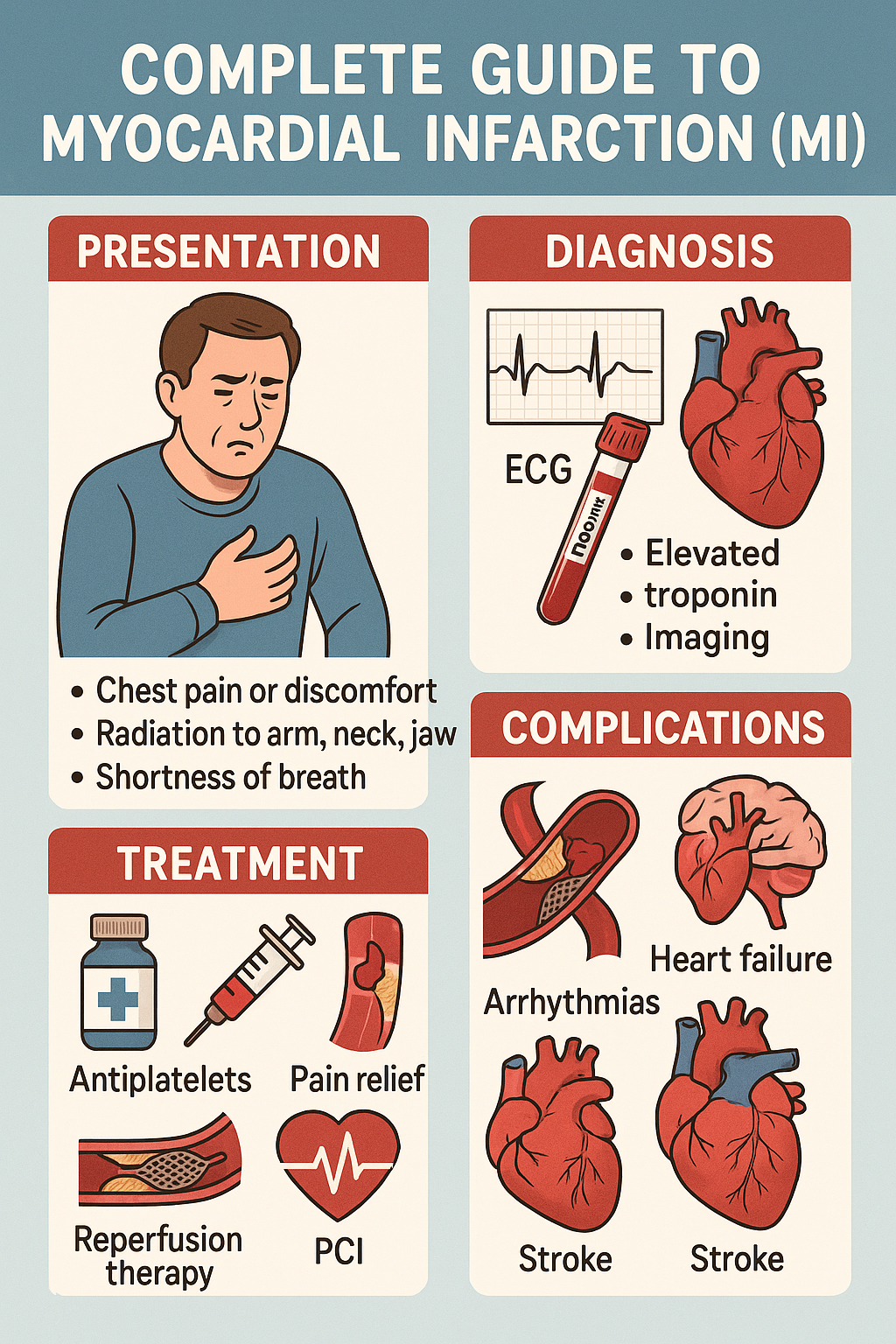
  • Coronary Artery Disease- Pathophysiology, Diagnosis, and Complications

    Introduction
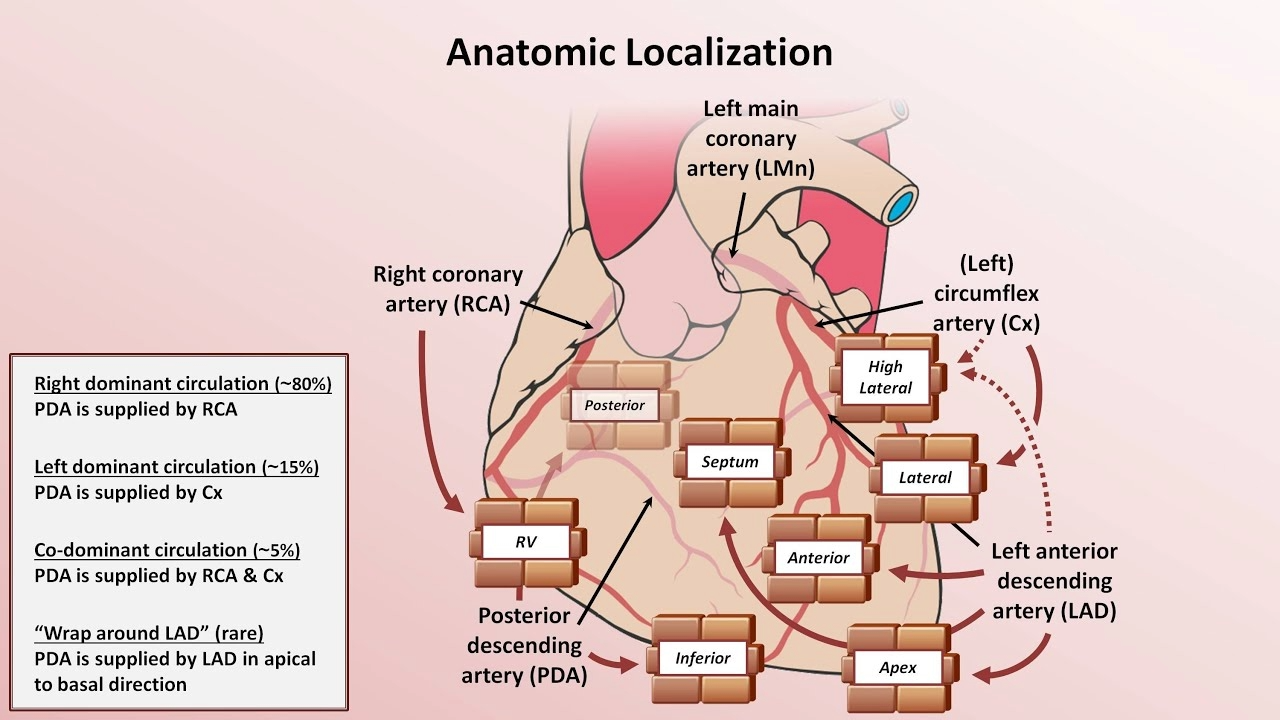
    foreign what’s up Ninja nerds in this video today we’re talking about coronary artery disease this is going to be a part of our clinical science section if you guys want to follow along and really understand this topic with some great notes some great illustrations go down in the description box below we got a link to our website where you guys can check that out also on our website we are going to be working on developing a US Emily step two in a pants prep kind of course so you guys are interested be on the alert that’ll be coming out pretty soon also you guys like the merch we got some new merch going on here check this out please go down the description box below and check out the link there as well get yourself some swagoo there all right we’re going to start talking about CAD so CD diseases of the coronary artery is what it is we’re not going to go through we should have already covered this in our basic kind of foundational science Concepts about the coronary vascular Anatomy what I really want us to do to really kind of get straight to the point here is here we have a section of the heart so I took and I cut the heart and I can see here parts of the ventricle so here’s going to be my right ventricle and here’s my left ventricle this will be the posterior portion and then over here coming out of the Whiteboard like it’s going to punch you in the face this is the anterior portion what happens is you have vessels that are going to be supplying this big chunky muscle of the actual heart what are those those are the coronary vessels and the most basic concept there is four that I really need you guys to remember one here in the posterior portion guess what it’s not that hard it’s called the posterior descending artery we’re going to abbreviate that as the PDA it doesn’t take a rocket scientist to figure out that this supplies the posterior portion of the heart it’ll Supply a little bit of the right ventricle a little bit of the left ventricle as well the other one which is going to be on this right part here is called the right coronary artery this one supplies the right ventricle and parts of the inferior portion of the left ventricle this right here is the Big Daddy this is the Mack Daddy of all the coronary vessels this is the one that you don’t want to get occluded this is called the lad or the left anterior descending artery this one supplies the septum IT Supplies the anterior wall of the left ventricle and it even gives off some of the lateral wall of the left ventricle so really really important artery and the last one here that we have we’re going to zoom in on in just a second here this one is called the left circumflex artery which we’re going to abbreviate lcx and that supplies the lateral wall of the left ventricle so when we talk about coronary artery disease it’s a disease of these vessels so we have to zoom in on a chunk of this vessel in the associated myocardium that’s what we’re going to do here so we’re zooming in on this puppy so this is a zoom in view of that that portion there so here we’re going to have a portion of the left circumflex artery and here’s a piece of myocardium what happens in patients who have coronary artery disease is the most common cause of that disease is atherosclerosis that is by far the most common cause so then we have to ask ourselves the question what is atherosclerosis and what causes atherosclerosis atherosclerosis is these fatty plaques that develop within the wall of the actual blood vessel and include the actual blood flow what leads to this I want you to remember the mnemonic sad CHF so sad CHF will give you the following things to remember one is smoking second is Advanced age now when I specifically talk about this one I’m talking about greater than 45 for males and greater than 55 for females don’t forget that D got the diabetes the C is for cholesterol so this one’s kind of a funky one right so cholesterol is high now when I talk about cholesterol being high which ones am I specifically talking about that’s the real problem here there’s two of them it’s high LDL and then a weird one that kind of doesn’t completely go along with this is low HDL so don’t forget that as well so a dyslipidemia the next one is hypertension and finally a family history of coronary artery disease so these particular risk factors will then do what it’ll stimulate this vessel to become diseased it’ll cause plaques to form within the actual coronary vessel now when that happens look what we get we can get two particular scenarios here you see this vessel here now look you got this big old atherosclerotic plaque the big difference here is that this is called stable current coronary artery disease because what happens is the plaque is kind of covered by this fibrous tissue and the interesting thing about this plaque is that it’s very stable but what you will notice is that look at the lumen in comparison here the Lumen is significantly smaller so because of this what’s going to happen to the actual blood flow in this particular area here there’s going to be a reduction in the oxygen supply if I have a reduction in oxygen supply because of having this big old stenosis aluminal stenosis of the coronary vessel that’s going to lead to less oxygen being delivered to The myocardium now that may lead to ischemia but generally these patients don’t have a lot of ischemic symptoms the chest pain is the primary classic finding what really leads to this is something else this myocardium decides to say all right you’re giving me a very little oxygen but what if for some reason I decide to consume more oxygen huh that’s interesting so what would be a reason why the patient would decide to have an increase in the oxygen consumption maybe they’re demanding more let’s use that term so there’s an increase in the O2 demand now the reason for the reduced O2 Supply is this plaque this plaque is causing the reduced oxygen supply what would be causing the increase in oxygen demand there’s two particular reasons that I want you to think about one is the patient’s heart rate decides to go through the stinking roof they decide to tack away maybe in the 170s 180s whatever it may be that’s causing the heart rate to go up if the heart rate goes up the heart has to beat faster it has to work harder and consume more oxygen if the demand goes up and the supply is low you create a mismatch and a recipe for ischemia so that’s one particular reason so if we have these two particular things here this is a recipe for what ischemia and what is ischemia ischemia can be simply defined as a reduction in perfusion to the tissue and it’s inadequate to meet the tissues demands so that’s the big stimulus here now what’s another reason why the O2 demand can go up another one is high blood pressure if the patient has hypertension they decide to shoot their blood pressure up so now they’re afterload’s crazy high if their afterload is crazy crazy high now the heart is going to have to beat so much harder to generate enough stroke volume to push blood out of the heart that’s the big concept here and so this is why this is so interesting because in patients who have stable coronary artery disease when they’re at rest they don’t really have any angina what really starts to happen is when they start to exert themselves and increase their oxygen demand then they develop angina and so one of the classic findings of CAD is that in these patients they have ischemia but generally this ischemia what’s the way that they’ll present they’ll present with angina so let’s actually do this in red here because this is the classic finding of patients who have stable CAD but this angina is very very specific in the sense that the angina will only actually do what increase or occur whenever the patient is exerting an increase in their demand and so this is angina that is worse with exertion because if you exert yourself you decide to go running you decide to walk or you whatever it may be you increase your heart rate increase your blood pressure you increase the demand then if you decide to decrease the demand you stop exerting yourself what would happen the demand would go down and the ischemia should actually go away so this would get better with rest this is generally the classic finding of patients who have stable CAD they have a stable plaque reducing Supply if you increase their demand this will cause worsening ischemia all right neck next concept here this is the scary one this is the one that most people are frightened of in CAD they have a disease coronary artery right we’re just using this left circumflex as an example they have a plaque maybe the plaque is somewhat stable but it’s not completely stable at certain parts and what happens is this plaque decides to rupture so you get what’s called a plaque rupture a plaque rupture and why is that bad well if you rupture that plaque you expose that inner cheesy material which is highly thrombogenic when it’s extremely thrombogenic what happens here when you have this massive plaque rupture platelets love to come and stick to this and then you develop this thrombus oh my gosh that’s terrifying so you have a plaque rupture and this creates a thrombus that forms on the actual plaque when you have a thrombus that forms on top of the plaque now what happens to your O2 Supply here it’s massively decreased and so what happens in these particular patient populations is their O2 Supply is incredibly low and if you have an incredibly low O2 Supply you’re going to stop perfusing The myocardium and The myocardium here is going to start becoming as chemic and that’s the scary part of acute coronary syndrome but we have to be able to differentiate these because they’re a Teensy bit different in nomenclature and understanding the actual disease process so let’s say here I take three particular types of acute coronary syndromes in one scenario I rupture the plaque when I rupture the plaque it does kind of really kind of bust open a lot of this thrombus starts to form and then same thing here for nstemi I rupture the plaque a lot of thrombus begins to form so we call this what for these two this is a sub total occlusion now when I have a subtotal occlusion because I form this this rhombus on the plaque then I’m reducing the blood supply C very very significantly right so definitely for both of these I’m going to have a reduction in O2 Supply very very low O2 Supply but the big primary difference here is what happens to The myocardium now you’re not giving enough oxygen to the tissue in this particular scenario if I have the patient having ischemia of their sub endocardial layer so I have what’s called sub-endocardial ischemia that is more specific for unstable angina so this is going to be again a sub endocardial ischemia and here is the big big difference I reduce the supply my sub-endocardial layer begins to start screaming but here’s the other thing I don’t kill any tissue none of the tissue dies and so there’s a particular molecule that leaks from these tissues whenever there’s tissue death you guys know what that’s called troponins I know you guys are all screaming at home right so troponins so what would I say troponins what would I say about the troponins would they be positive or negative they should be negative right so that should be one particular thing they shouldn’t really have a troponin bump and on top of that what we’ll learn a little bit later is is they shouldn’t have any ST segment like elevation they may have because of this ischemia they may have what’s called some ST segment depressions or some T wave inversions and that’s the other thing that we’ll actually remember for these two but we’ll go over that when we get into the diagnostic section now you’re probably like okay these are kind of the same though Zach you said a subtotal occlusion for both of these so what’s the difference between unstable engine and stemi well really with an in stemi I actually have my Supply so low that I actually began to infarct so it’s no longer sub-endocardial ischemia this is called a sub endocardial infarct and that is the big difference here I actually am causing death of the tissue if there is death of the tissue what will leak out as a result troponins and so if the troponins are leaking out they should be positive if we were to test them so we will have a positive troponin leak and the last thing is is this is a small infarct it doesn’t cause St elevation but it does cause SC depression or T wave inversion and that is how we really kind of differentiate between these two when it comes down to the pathophysiology the last one here is going to be for the stemi and for the stemi this one is primarily a total occlusion a complete total occlusion of that entire coronary vessel so this vessel is completely jacked up it is filled to the brim with clot if I completely clot off this entire Lumen do I have any blood supply no and so the difference between these is that these have very little Supply this one’s completely choked off there is zero O2 Supply and if I get no oxygen supply to The myocardium what begins to happen it gets ticked off and the entire myocardium begins to become damaged and because the entire tissue is damaged we call this transmural this is a transmural infarct the entire wall gets jacked up that’s no bueno what would happen to the troponins through the roof these usually will bump pretty high and then the last thing is this will definitely present with ST segment elevation that’s where we get the name so we’ll see particularly ST segment elevation we’ll get into the details of that a little bit later but they should have a positive troponin because of the transmittal infarct St elevation because of the transmeral infarct and that is how we pathophysiologically describe semi the last thing the last thing that I want you guys to understand here is for stable CAD they present with Angela worse with exertion better with rest because it’s particularly exertional dependent for acute coronary syndromes their type of angina is a little bit different for these guys for the acute coronary syndromes acute coronary syndrome findings these guys present particularly with angina same thing same thing but this can occur at rest and it is more intense so there’s an increased intensity of that pain it is much much more intense and there is an increase in frequency of the pain so when you’re trying to compare the two between an acute coronary syndrome angina and a stable angina this is really the big difference if it occurs at rest it’s intense and it’s occurring more more frequently that’s more concerning for an acute coronary syndrome if it’s an engine that occurs with exertion and improves with the rest of what we call Nitro which we’ll talk about the treatment section that’s stable angina the other thing that I want to talk about really quickly is this classic finding of angina if you will so when patients present with angina it is a substernal type of chest pain it’s a squeezing choking type of pain and generally this can you want to watch out for radiate to the left neck left face left arm all right other Associated symptoms that can be atypical findings or anginal equivalents is epigastric abdominal pain and some nausea and diaphoresis so watch out for that all right let’s now take this understanding that we have the pathophysiology and move into what happens if a patient does infarct they damage their myocardium what are some issues or complications that can arise all right my friends so now the patient has come in they have developed an nstemi or a stemi so they have infarcted some of their tissue when a patient has infarcted some of their tissue you’re going to start seeing potential issues and complications arise what are those issues what are those complications that we have to be weary of because it can have a high mortality rate so one of the big things is when you start to infarct the tissue it can increase the risk of arrhythmias arrhythmias usually developed within the first 24 hours after a patient has had some type of nstemi or stemi so this is the one that you want to watch out for very early in that course what can happen is one of the things that you can actually see here is you know whenever patients develop what’s called a RCA occlusion right so they have develop what’s called a right coronary artery occlusion do you guys remember which parts of the heart that’s applied it’s pretty sure for right the right ventricle and inferior aspect of the left ventricle but another thing is it gives like this little branch that supplies the AV node and sometimes in patients who get these RCA occlusions you can actually destroy this structure here so here’s you have your AV node and you go into your bundle branches I can actually destroy this structure here and if I have an RCA occlusion that leads to an AV node destruction now what’s going to be the problem with that this is supposed to be able to allow for electrical activity to go from the Atria into the ventricles now you lose that you’re going to start developing AV blocks and so this patient could develop a AV block that could precipitate a profound bradycardia and so this is something that you want to watch out for watch out for like second degree heart blocks third degree heart blocks this is something that can be potentially evident so the patients develop an RCA occlusion this RCA occlusion could potentially cause AV no destruction which could then lose the electrical connection between the Atria and the ventricles precipitating the AV block and now the actual infra uh nodal components or like the purkinje system now have to take over the actual rate of the heart and that will lead to a profound beta bradycardia all right so that’s one thing to watch out for so if you have a patient who has then had an nstemi or stemi check potentially if they have bradycardia you really want to watch out for that as a potential complication the other thing that can happen and you usually see this with any kind of like lad or left Circ kind of occlusions this is usually going to affect the left side of the heart so whenever these patients actually develop an infarct they start to damage this left ventricular tissue and whenever you damage this left ventricular tissue you infarct it now you create a re-entrant circuit so LED left circumflex occlusions can increase what’s called re-entrant circuits the problem with that is is that if you create re-entrant circuits within the ventricle this can create a ventricular Rhythm and that is absolutely terrifying because you know what these patients can potentially develop if they develop this reentrant circuit and starts flying off these kind of electrical activities the patient can potentially go into what’s called ventricular tachycardia that could potentially go to ventricular fibrillation and then from there sudden cardiac death so you really want to watch out for these potential complications and patients who develop an end stemi or stemi and again just to remind you when is this the most profound usually you want to watch out and the first 24 hours after an end stemi or a stemi for particular types of arrhythmias all right so these are the two big ones that I want you to remember here the next really really scary one that you can’t miss and again this is usually most common in the first 24 hours as well is acute heart failure this is one of the big causes of acute heart failure so with arrhythmias particularly V tag v-fib or profound AV blocks like bradycardia you want to think about myocardial ischemia from acute heart failure you want to think about myocardial ischemia as well think about it it’s pretty straightforward let’s see here we have the left ventricle and then I decide to develop a let’s say a massive lad occlusion you can get this from your your left Circle but I’d say the left of the lad would probably be the most disastrous one to have because it supplies the septum the Apex and even a part of the lateral wall you imagine knocking this thing out oh my gosh that’d be terrifying so if you infarct this entire tissue what are you going to do you’re going to drop the contractility now now you’ve caused damage to multiple myocardial tissues you drop the left ventricular contractility you’re going to drop the left ventricular ejection fraction if you drop the left ventricular ejection fraction now you’re not getting blood out of the heart so the problem with this is is that if I damage this tissue I’m not going to be able to get blood out of the left ventricle and out into the aorta this process is going to be inhibited so there’s going to be a drop in what’s that called the volume that gets pumped out of the heart within one minute microtic output so my cardiac output will drop then I won’t perfuse tissues if the cardiac output drops enough what’s that formula blood pressure is equal to cardiac output times the systemic vascular resistance if my cardiac output goes down enough it can potentially drop my blood pressure so the patient may develop hypotension but the most worrisome complication here is if that hypotension leads to reduced perfusion to the tissue it can put a patient into what’s called cardiogenic shock so this is when they’re not perfusing the tissues and you want to watch out for like potentially multi-system organ failure other organs are going to start failing such as the kidneys right and that’s a really really big thing to watch out for so again because you lose you have this led occlusion you knock out a big portion of the left ventricular contractility you reduce the left ventricular ejection fraction and what happens is that drops the cardiac output that can lead to hypotension and can stimulate a patient going into cardiogenic shock so you really want to watch out for this a reduction in contractility a reduction in left ventricular ejection fraction then precipitating this low cardiac output and cardiogenic shock here’s the other scary thing if the blood can’t go forward so you have a problem getting blood going forward where will it go then what happens is the blood will start backing up into the left atrium and when it backs up into the left atrium it’ll go back into your pulmonary circulation when it goes back into the pulmonary circulation where do you think it’s going to go it’s going to go right into the lungs my friend and then what’s going to happen is you’re going to start filling the lungs with fluid because the hydrostatic pressure and the pulmonary veins are going to start increasing and fluid is going to leak out and these patients will develop a profound pulmonary edema so you want to watch out for these patients developing pulmonary edema and this can lead to hypoxia so if you have a patient who has just had an instamy or stemi they now are developing features of pulmonary edema such as dyspnea or watch out for that as well they can also develop not just profound hypoxia but they may develop dyspnea so watch out for dyspnea as well or hypoxia so if you have a patient who has an nstemi or stemi massive LED occlusion they knock out the actual contractility they lose their left ventricular ejection fraction they don’t pump blood out so develop hypotension and perform perfusion to the tissues and pulmonary edema this is something that you want to think about as acute heart failure and a patient who’s had an MI all right that’s this one very very scary one you really want to get on top of that one the next one is pericarditis this one is actually one of the nice ones like if you wanted to get any complication this is probably the ones you want to get because this is the one where it’s not going to have a super high mortality rate it’s not fun I don’t want to deny that but it’s not going to be the scary one so if you develop an infarct generally anywhere near the pericardium you’re going to have infarction of tissue right neutrophils macrophages will all come into this area and try to clean it up and lay down some granulation tissue but there’s going to be a lot of inflammation in this area it’s not out of this world to think that the inflammation will extend to the nearby pericardium and if it extends to the nearby pericardium this can cause inflammation of the pericardium which will lead to pericarditis now when patients present with pericarditis they present with what’s called a pleuritic that’s one of the big differences here so sometimes what gets scary and hard to suss out with these patients is they had an MI they came in because they presented with chest pain now they’re presenting with chest pain again you have to be able to differentiate the two is it squeezing is it choking is it feel like there’s someone sitting on your chest kind of pain radiates to the left jaw neck arm or is it this type of pain where it’s a kind of more of a pain that hurts whenever you’re taking breaths does it actually change whenever you kind of lean forward a little bit and offload the pressure on the pericardium so there’s a positional component of it that’s more suggestive of pericarditis another thing is that you want to listen because if the pericardium gets really really inflamed the layers start kind of actually rubbing up against one another and it creates a weird rub on auscultation we call it a friction rub we call it a friction rub and so generally in patients who have low grade fevers a pleuritic chest pain a positional type of chest pain another one great for your boards is a chest pain that radiates to the trapezius that’s classic in your vignette so don’t forget that one as well but if her presents like this after having some type of cardiac event you definitely want to think about pericarditis now sometimes and I and I hate it we start thinking could there be another component to this like there’s two different types of pericarditis this is called fibrinous pericarditis right so there’s two types one is called fibernous and the other one is called dresslers how do I suss out the two amphibians pericarditis it’s usually very soon generally one to three days after having the cardiac event so that’s one thing so if you have a patient who’s approximately one to three days post MI it’s more likely februinous for your exams in True Life this isn’t truly that important but if it’s free exams dresslers is usually a little bit later so it’s a kind of pleuritic chest pain with a friction rub that comes generally about 14 days two weeks after an MI so approximately two weeks post am I and that’s one of the things that they may try to trip you up on your exam in true life it’s not that important but for your exams something to not forget about all right so we’ve got a rhythmias we got acute heart failure we got the pericarditis we come down to the ones that usually cause sudden hemodynamic collapse and these are terrifying as well these I’d say are less common in the new reperfusion era which we have PCI is the primary way that we reperfuse people but complications that can arise and a patient who gets an LED occlusion all right so an LED occlusion what happens is is one of the parts that can get really jacked up here is the interventricular septum so whenever there is a infarct of the interventricular septum you damage this tissue so now look this endocriticular septum is all jacked up it’s all infarcted what can happen is sometimes when the tissue is super weak and a chronic it can actually be thin enough that you can rupture the septum and you can create what’s called a ventricular septal defect and look at this now when I rupture this puppy I have a big hole in between the left ventricle and the right ventricle and generally blood is going to go from the high pressure system and to the low pressure system so it’ll go from the left ventricle into the right ventricle what that will do is that will cause the patient to present with a murmur so usually they’re present with a murmur some type of holocystolic murmur so if you hear a new murmur on the patient definitely one of these things that you want to think about and it’ll precipitate heart failure generally it’ll cause the patient to go into a right heart failure before they go into left heart failure so it’s more common that they’ll get right greater than left because think about it you’re overloading the right ventricle blood is squirting from the left ventricle into the right ventricle and you’re overloading the right ventricle so that’s something to think about but in a patient who presents with hemodynamic collapse in a hole of systolic murmur think about a vsd the other one that’s also really interesting as well that you really want to think about here is going to be a patient who presents with what’s called a papillary muscle rupture so let’s say that they have an occlusion here and this occlusion what it does is it knocks out the blood flow particularly this you can you can see with a bunch of different types you can see this usually with inferior ischemia so usually right ventricular or RCA occlusion so if a patient develops like an RCA occlusion what can happen is this can cause a papillary muscle ischemia so this will cause papillary muscle ischemia or infarct let’s actually let’s say infant so again you have an occlusion there you’re infarcting the tissue that’s in stemming and stemi you develop an infarct of the papillary muscle when you infarct that tissue now it’s supposed to be holding onto the chordae tendine it can’t hold on to the chord A10 anymore and so if you can’t hold on to this chordatanine what is it going to do this sucker is going to break right off it was supposed to be anchoring it down now look at it’s flapping in the Wind because of that you can’t hold this valve down and what happens is this valve becomes super unstable and it can easily whenever the patient goes into like statistically whenever they have what’s called ventricular systole this valve can blow right open and now you get something called regurgitation now a regurgitant jet instead of going this way can fly back into the left atrium and so you really want to watch out for that so when a patient develops on RCA occlusion they infarct their papillary muscle what happens is they can develop what’s called acute mitral regurgitation and that will cause a murmur Believe It or Not similar to a vsd a hollow systolic murmur and we’ll put the patient in two heart failure usually in this particular scenario left more than right obviously because it’s going to be affecting the left side now so these are the things that you really want to watch out for pretty scary one again not as common in the reperfusion era this last one is probably the most terrifying this one I feel like most people usually just die because they go into PE arrests because they’re left ventricle just explodes but what happens is you get a really big LED occlusion usually in combination with the left circumflex but what happens is you infarct this entire left ventricular free wall imagine this whole thing is dead super weak as it becomes weak boom this entire free wall ruptures oh my gosh this is so terrifying blood that’s in your left ventricle will then squirt out right into your pericardium as the Blood starts filling into the pericardium what is this called hemopericardium imagine all that pressure from here left ventricle just squirting blood into that pericardium that is terrifying so what happens is you get an LED occlusion you get a free wall infarct this thing causes a free wall rupture and this will push a patient into what’s called what is this when you have a lot of blood that’s accumulating within the pericardium and it’s squeezing on the heart not allowing for it to properly fill it’s called cardiac tamponade so this is another one that you want to watch out for we’ll talk about this in the pericardial disease section but you want to watch out for a patient developing that Bex Triad right so the jugular venous extension the hypotension and the muffled heart sounds that would be another really really big one and then again you can potentially see signs of like pulses paradoxes but again we’ll go over all that in the pericardial disease section all right this is another potential complication the last one that I want you guys to watch out for here is again another type of LED occlusion so if you get an LED occlusion and then what happens is it infarcts this particular tissue here right so you could develop some depth of this tissue then what happens is something kind of weird it ruptures but it doesn’t rupture the way that you would normally think so it doesn’t completely rupture the free wall and what happens is you develop a rupture here but it’s kind of contained there’s like a fibrin kind of like clot that’s kind of stabilizing the rupture so it doesn’t allow blood to empty into the actual pericardial cavity so it’s a contained rupture we don’t call this an aneurysm per se even though it kind of looks like it it’s a pseudoane or a contained rupture so we call this it creates a pseudo aneurysm the problem with this is that now blood can kind of just stay in this area this can create like a stasis of blood flow what happens when you create stasis of blood flow clots Virgos Triad right and so then this can lead to clots forming here and if you get a clot that forms right in here and then it decides to flick a part of that clot off what do you get thrombo and bottle complications that patient gets like a stroke or something right so you want to watch out for thrombo and belai these are the big big things that I want you guys to associate in patients who have had an end stemi or a stemi all right now that we’ve covered all the pathophys the issues and the complications of myocardial ischemia and coronary artery disease now we’re going to do is we’re going to learn how to diagnose these diseases a patient comes in they have anginal chest pain and the classic way that I taught you guys what do we do first thing EKG you can add on some cardiac biomarkers like troponin and ckmb but they’re not always going to be the first test of choice ECG should be the first test once you’ve done that if you see this it’s normal there’s nothing really bad about this you can get a troponin if it’s negative that again supports the concept that maybe this is a stress induced ischemy and we didn’t stress them enough so maybe this is stable angina we’ll talk about the workup of that in a little bit if you have a patient who doesn’t have stress induced angina then you’re thinking that they have an acute coronary syndrome that this doesn’t require change in demand so that’s going to be things like T wave inversions ST segment depressions and then you’re thinking about things like an N stami or an unstable angina how do I determine that I want to know which one developed an infarct that’s the importance of the pathophysiology if it’s ischemia they’ll have a negative troponin that’s unstable Angela if the troponin is positive that means that they had an infarct that’s an nstemi if I see this so that’s a stemi right there right that’s a big old Tombstone thing you know things are puckering up down there that’s not good this is St elevation this should make you think about a stemi if you checked at your opponent and it’s positive it would be way more suggestive of an SD segment elevation of mine there is this potential though that if you see St elevation and a patient known as cocaine tripped hand smoking younger respond to calcium channel blockers and their troponin is negative it’s a little bit more suggestive of vasospastic angina all right that’s how I would start this process chest pain EKG cardiac biomarkers determine if the patient has the worst case scenario which is a stemi if they have a stemming what do I do I want to know where the heck that stem is so then I’m going to try to localize the stemi and this is where EKGs are going to be a little bit more helpful in your exam so what they’ll do is they’ll say hey here’s an EKG what do you think is the vessel that’s occluded so the first one here is going to be an anterior and I told you that’s V1 to V4 I look for any St elevation in these leads and if you see that that would be suggested that the LED may be occluded if you’re looking at the next one which is an inferior one you’re looking at two 3 in avf and I see SD elevations maybe the right coronary artery is occluded with that being said if you think are right if you have an inferior Mi you should always do right-sided chest leaves just as a quick aside because it may show that the right ventricle is actually becoming infarcted and that’s important to be able to identify but nonetheless lateral the left circumflex it’s one and then AVL and then V5 and V6 you’re looking for St elevations there and that would suggest the left circumflex is occluded and then lastly if I see St depressions or T wave inversions in B1 to V3 I slap on the posterior chest leads in V7 to v9 and I see SD elevations that’s suggestive of a PDA occlusion this is the way that they could try to test you on the exam as to where the actual stemi you think is occurring which vessel is diseased or occluded now with that being said ECGs are really really good combining it with an echocardiogram is even better because what you’re doing is you’re kind of making a correlation between the chest leads where you think the vessel is actually occluded and then correlating that with wall motion abnormalities where the areas of the ventricles aren’t Contracting very well with the vascular territory so you can kind of see here I’m not going to go crazy because you won’t be heavily tested on this but if you see V1 to V4 St elevations and you look on the Echo and you see that the this territory the LED isn’t Contracting well then you can say oh man I really think that this person is having a stemi and this kind of correlates and you can even correlate this with nstemi’s as well but that’s an important thing to do is to correlate hey anterior wall motion on rally hey maybe the LEDs knocked out RV is not Contracting very well they have an inferior wall motion abnormality maybe the RCA is knocked out left circumflex knocked out oh maybe that lateral wall isn’t really Contracting very well or maybe the posterior walls are Contracting very well correlate your Echo with your ECG all right lastly in most patients on your clinical vignette you’re going to get the ECG you’re going to see that they have SD segment elevation maybe you get a troponin that’s positive they’re having crushing chest pain what’s the test of choice but it’s also the therapeutic like option in these patients it’s usually going to get a coronary angiogram the benefit of this is that you’re going to be for most patients when they get in the angiogram you’re showing the occlusion but you’re also going to treat the occlusion you’re going to go in and put a stent in that area you’re going to balloon it open and put in a stent but this is a really good test and probably the best test to find where the occlusion is so again you’ll snake a catheter up there shoot contrast and look to see which of the vessels are not filling and where is the occlusion and again that’s one of the best possible tests you could do all right so if a patient has a stemi go through that progression what’s the ECG show where would a potentially localized correlated with your Echo and send them to the actual cath lab to find the occlusion and then treat the occlusion if they present with a normal ECG and a normal troponin then we’re thinking about that stable angina patient but we still are scared because they have anginal chest pain we would want to send them for a stress test so we’ve ruled out ACS and we’re going to say can the patient exercise if they can then you want to go ahead and do what’s called stress exercise testing and so what we’ll do is we’ll kind of say okay there’s a couple different options we could do here we can get a baseline ECG or we can do what’s called a myocardial perfusion imaging where we give them like a radioactive tracer that shows areas of perfusion in their heart or we can do an echocardiogram and see if it’s squeezing normally once we do that we’re going to make them work out get them on a treadmill and have them Reach the kind of a target heart rate once we’ve done that and they start to experience maybe any symptoms or they get tachy arrhythmias or we actually repeat the ECG MPI or echocardiogram what are we looking for after we’ve really stressed the heart if I see on the ECG oh there are signs of ischemia that’s stress-induced ischemia that would be helpful in telling me that this is a positive stress test if I didn’t do the ECG test and I did the MPI then I’d be looking for areas of poor perfusion if I have to make them work out and I increase their demand now these errors are going to becoming suffering they’re going to suffer now and the last thing if I do an echocardiogram and I see areas that aren’t Contracting very well maybe they have an lad really big plaque there and I see that their anterior wall isn’t Contracting very well after I had them exercise I could say oh there we go we have stress to induced wall motion abnormalities so these are all ways that if this happens and we see these changes that’s a positive test now the reasons why you would do an NPR an echocardiogram because usually this is the first line is if their ECG has some weird things on them usually if they have like a left bundle it makes it really hard or if they have Q waves it makes a little bit difficult so you may do an echo or an MPI in those scenarios okay but we go to the other end of this algorithm which is the patient cannot exercise maybe they have terrible osteoarthritis they have some type of like rheumatological condition where they can’t ambulate they just they can’t do these things they can’t exercise at all in those scenarios then you have to kind of precipitate the same increase in demand by giving them drugs two of the things that we would do is we would again get a baseline MPI or an echocardiogram and then we would give them a medication that would either really reduce the supply or increase their demand one is adenosine or dipridamole and what it does it decrease the supply it’s actually really cool I’ll show you how it does it in a second but I’m going to get the Baseline see what it looks like and then give them this drug and what it should do is if they have stress induced ischemia it should produce cold spots on their MPI I could also do the same concept give them an echo look for any like contractions of their ventricles give them dobutamine that should make their heart have to pump faster and pump harder which will increase the demand and it should show wall motion abnormalities and that would be a potential stress-induced ischemia now let’s explain this adenosine or dipyridamole it’s actually really cool it’s called coronary steel syndrome here we give diaperinol or adenosine what it does is it does not vasodilate the disease vessel and it dilates the normal healthy vessels if you dilute a vessel you reduce the systemic vascular resistance and you drop the pressure in this area and it’s easier for blood to flow in this direction but then what happens is you don’t dilate this vessel the pressure doesn’t drop in this area and now blood won’t want to go this way it’ll want to go to the lower pressure circuit and so this is literally going to steal blood away from the diseased area the supply is already reduced you’re going to reduce it even more and that’s going to precipitate ischemia and cause poor areas of perfusion so that’s the concept of this pretty interesting either way you do any of these tests and it becomes positive usually the next thing is to say okay let’s try to treat the patient we know that they have some type of stress this ischemia let’s try to get them a little bit better but if we have any inkling that this patient may need to kind of go and get revascularized do something like a coronary angiogram look for the actual occlusion determine the severity of it or coronary CTA it’s non-invasive and this will help you to determine to look at the actual vascular lesion so here’s a coronary CTA and then here is a coronary angiogram to look for any kind of lesions that are present so you can see here’s like this little stenotic area and you can see kind of stenotic areas here as well but that’s the concept now after we’ve done this we’ve now determined the approach for stable Cad and the approach for stemi the approach for patients who have nstemi and unstable angina you really kind of just determine them already you determine if it’s unstable angina or nstemi based upon the troponin and you’re going to treat those guys relatively the same now that we’ve done this how do we go about treating the first patient which is the stable patient well the first thing is you don’t want that plaque to rupture but more importantly if that plaque does rupture I don’t want to thrombus to form on the plaque because it’ll become subtotally or totally occluded and then I end up with an ACS scenario so how do I do that aspirin simple next thing is I really want to reduce their anginal chest pain so I want to reduce the oxygen demand so the ways that I can do this nitroglycerin because that reduces preload and dilates the coronary vessels and the second thing which is even more beneficial than that is beta blockers there is other drugs so there’s not just nitroglycerin this is short acting but the drugs that you can give for long acting effect would be things like isosorbide dinitrate and there is the benefit of calcium channel blockers as well so it’s usually beta blockers then PRN sublingual nitroglycerin long-acting isosorbidden nitrate which is another type of nitro and last line is usually calcium channel blockers and then after that there’s another one called renolazine but we’re not going to go there all right you’ve treated the patient with Aspirin you put them on a beta blocker they have sublingual Nitro you’ve treated them with isosorbet and nitrate but now the patient has a positive stress test that is really really bad they have an angiogram which they got and it showed really really bad lesions like an lad that was like super stonotic or they have been symptomatic despite aspirin despite statins despite a beta blocker isosorbet to nitrate sublingual Nitro Etc and they’re still having chest pain these patients have to be revascularized so when you want to revascularize these there’s two options there’s PCI or cabbage how do I determine if there’s no left main lesion no left main coronary artery lesion they have less than three vessels that are plaqued up and they have a normal left ventricular EF it is preferable to do a PCI so a percutaneous coronary intervention now what we do is is we open up the artery we take a balloon we inflate the balloon and they’re going to kind of try to open up and expand this area then what you’re going to do is is you’re going to pull back the balloon and leave in this stent which is going to hopefully keep this vessel nice and open that is the concept here but once we place this stent in we do not want the stent to clod off and we’ll talk about what we’ll do for that in a second what about the patient who gets the Cabbage it’s the exact opposite they got a left main coronary artery lesion they got three or more vessels that are plaqued up and they’re EF stinks probably better for these patients to get a cabbage a coronary artery bypass graph so they have a lesion like right here I’ll take a graft and I’ll move this over this way and sometimes we’ll take like the internal mammary artery or we’ll take the greater saphenous vein and we’ll take those veins cut pieces of them and use them as the graphs to bypass these lesions you see how we’re bypassing all of these lesions here that’s the concept but to come back here we put the stent in when I put a stent in I don’t want it to throw on bows and so I’ll put them on Dual anti-platelets so in other words they’ll be on aspirin plus something like Clopidogrel or decagitalor for at least one year then after that year you can downgrade to just one of those anti-platelets whether it’s aspirin or it’s Clopidogrel but I have to keep this on so that they don’t stent uh thrombos this stent because that’s terrible they can develop a reinfarction so that’s the concept here here is the actual kind of like stent here and I want to prevent this I do not want them just like completely thrombos that stent all right the last thing is you can add them on statins as well statins help to prevent the actual plaque from continuing to hopefully get bigger and bigger and bigger we don’t want that so again standard therapy aspirin beta blocker Nitro sublingual PRN isosorbet and nitrate for long-term control beta blockers if need be add on the Statin they’re still symptomatic angiogram shells high risk lesions the stress test is really bad revascularize them PCI based upon this cabbage based upon this if they get the stent they need do anti-platelet therapy for a year all right unstable angina and nstemi it’s similar you

  • Why Blood Pressure Matters- The Silent Killer Explained

    Why Blood Pressure Matters- The Silent Killer Explained

    Introduction

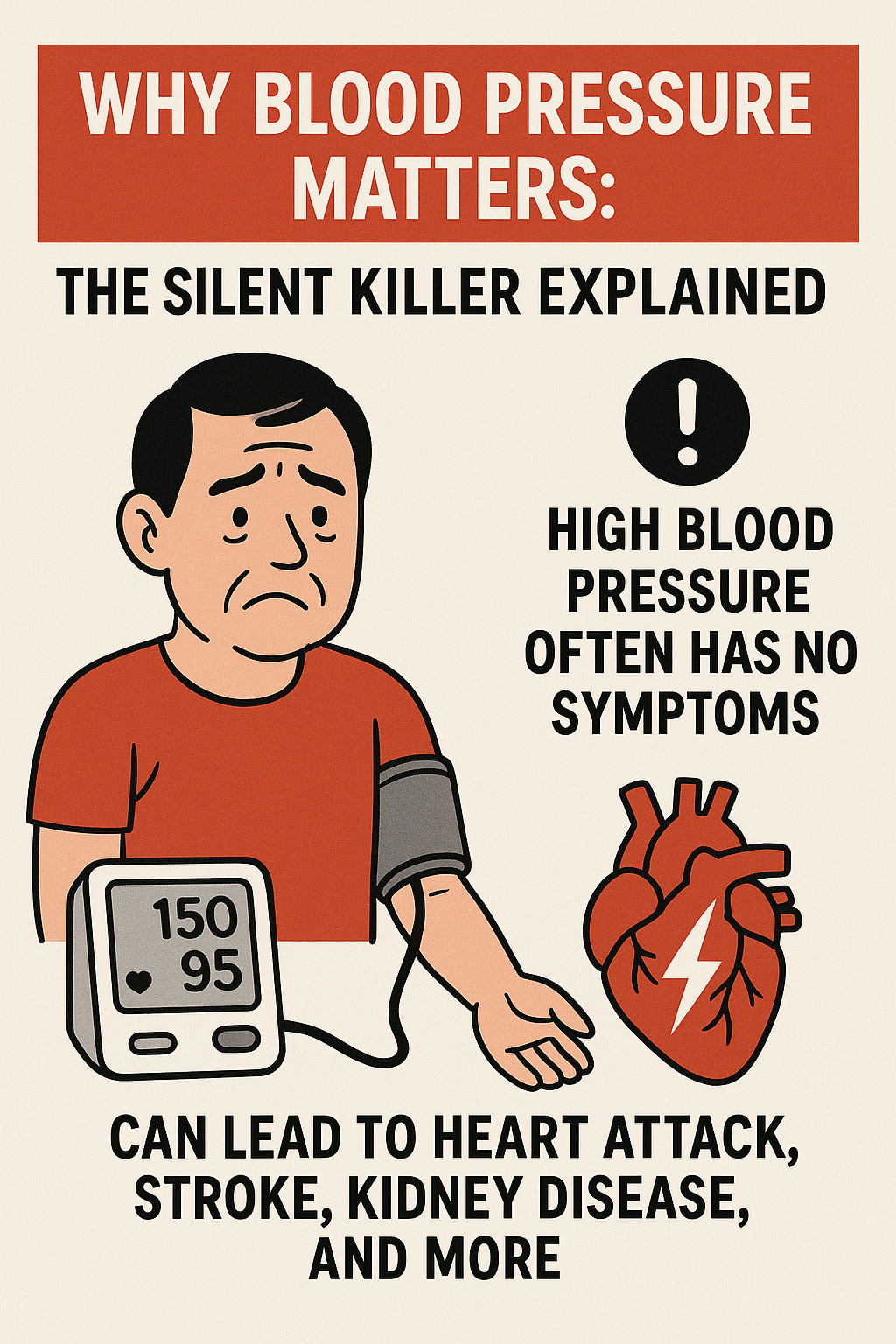
    have you ever wondered why blood pressure is so important I mean this is a vital that is checked during nearly every visit with a healthc care provider and besides giving us some important information on the current status of the cardiovascular system blood pressure or at least high blood pressure is known as a silent killer because over time if left untreated it can increase your risk of stroke heart attack kidney failure and even aneurysms So today we’re going to Define what blood pressure is the numbers you want to have have how to measure it and things that you can do to keep it at healthy levels so let’s jump right into this anatomical and physiological awesomeness

    The Goldilocks Principle of Blood Pressure
    so before I show you some really cool things on this body I want to start by saying that blood pressure like many other processes in the human body follows the Goldilocks principle you don’t want the blood pressure too low and you don’t want the blood pressure too high you want it just right or just enough enough to profuse the tissues throughout the body with enough blood if it’s too low these tissues won’t get enough oxygen and if it’s too high or at least too high for an extended period of time that increased pressure can literally damage the tissues and even damage things like blood vessels which can lead to other health conditions that we’ll talk about in a little while now you may have experienced a temporary decrease in pressure to say like your brain when you stand up too quickly and get a little laded but overall the vast majority of people deal with too high high of blood pressure rather than with too low and we call high blood pressure hypertension

    What Blood Pressure Is and How It Works
    but when it comes to understanding blood pressure we need to realize that blood is a fluid and fluids exert pressure on the walls of the container that they fill like how water in a hose would exert pressure on the walls of the hose or water in a balloon would exert pressure on the walls of the balloon so blood pressure is the force of the blood pushing against the walls of your arteries as the heart pumps blood throughout the body so if you look at the drawing over here on the White board you can see as the blood is pumping through the artery it’s also going to exert pressure on the wall of that artery and the equation for blood pressure is blood pressure equals cardiac output times systemic vascular resistance cardiac output is the amount of blood pumped out of the heart per minute which is influenced by heart rate and how forcefully the heart contracts with each beat and in general as cardiac output goes up so does blood pressure systemic vascular resistance is the amount of resistance created by the blood vessels throughout the body we could spend a lot of time on systemic vascular resistance but think of this resistance being influenced by the tone of the blood vessels like how constricted or how relaxed the smooth muscle is in the arterials generally more constriction increases blood pressure the length of the blood vessels also influences vascular resistance and blood pressure as well as the compliance of the blood vessels and what I mean by compliance is if you look at at this aort and you can see me poking it and just bouncing up and down on the aort you can see that it recoils and that’s what I mean by compliance arteries have elastic connective tissue built into the wall and so if the blood gets pushed into an artery that’s healthy and is compliant that artery will stretch but it won’t just stretch once the blood gets pumped into it after it stretches it will recoil and what that does is it’ll shoot the blood further Downstream and that’s free and what I mean by free is that it doesn’t require any extra ATP or any extra work by the heart it’s easier on the heart to pump into a nice stretchy compliant artery think of the opposite like a diseased or atherosclerotic artery that’s stiff and non-compliant and the Heart tries to pump into that you don’t get that stretch and recoil and so overall that will be harder on the heart and will increase blood pressure and this is one of the many reasons why you want to have healthy arteries you often hear about the link of cholesterol and plaque build up in the arteries yes plaque building up in the arteries can occlude and block the arteries and sometimes those plaques can rupture and travel further Downstream and cause all sorts of different problems but it also can stiffen the arteries and make them less compliant again potentially raising blood pressure

    Sponsored Note: Grammarly
    and with all this talk about blood pressure I want to mention something that helps to take some pressure off of me and that’s the sponsor of today’s video grammarly as a medical provider anatomy and physiology teacher and with running our education team here at the lab I’m constantly working across Ross multiple platforms such as Google Docs slack canva as well as addressing a lot of emails so in other words I have a lot of writing to do and I want to ensure that my writing is clear professional and impactful and this is where grammarly comes in grammarly is my AI writing partner that helps me get my work done faster with higher quality writing and again what sets grammarly apart is that it works where I work across over 500,000 apps and websites which means no more copying and pasting unlike other AI tools for instance I use grammarly to help me generate an outline for a video script on Google Docs and once I’m ready to post on YouTube or Instagram I use grammarly’s rewrite feature to help me condense my captions which helps make some of my content creation so much more efficient in streamlined grammarly also has 15 years of best-in-class communication Ai and provides personalized writing suggestions based on my audience goals and context it’s trusted by tens of millions of professionals and 96% of users users report that grammarly helps them craft more impactful writing and here’s one of the best parts grammarly is free to use and try out so sign up and download it for free using my link grammarly.com ioha thanks again to grammarly for sponsoring today’s video and now let’s get back to blood pressure

    Understanding Blood Pressure Readings
    now I’m sure all of you have had your blood pressure checked at some point in your life and blood pressure is measured in Millers of mercury and recorded with two numbers systolic pressure which is the top number represents the pressure in your arteries when your heart beats the second number or the bottom number is the diastolic pressure and represents the pressure in your arteries when your heart rests between beets and so for example if your blood pressure is 120 over 80 120 is the systolic pressure and 80 is the diastolic pressure and so where do you want your blood pressure to be for normal blood pressure you would want your systolic pressure to be less than 120 and your diastolic pressure to be less than 80 elevated blood pressure is a systolic reading between 120 to 129 and a diastolic less than 80 stage one hypertension is when systolic is between 130 and 139 or diastolic between 80 and 89 stage two hypertension is when systolic is 140 and above or diastolic is 90 or higher

    How to Measure Blood Pressure Properly
    now it is very important that you measure the blood pressure properly because obviously we want the numbers to be as accurate as possible and the proper way to measure blood pressure is to have the person relax sitting in a chair feet on the floor and back supported for at least 5 minutes before taking the reading you also want to avoid caffeine exercise and smoking for at least 30 minutes before taking the measurement as well as to ensure that the bladder is empty so you’d want to use the restroom prior to taking your blood pressure also the patient and the Observer should not talk during the rest period or during the measurement and the arm should be supported like maybe resting on a desk by their side now sometimes all of these steps don’t always occur in a clinic and this could be due to the type of clinic or the reason why someone is at the doctor’s office for example I work in Urgent Care it’s a pretty fast-paced environment where we don’t manage long-term conditions such as hypertension we’re managing urgent conditions and often patients are sick or injured and so this can temporarily Elevate the blood pressure and so in some of these cases we may take those mild elevations with a grain of salt but in a family practice or Primary Care setting where one of the main goals is to assess blood pressure those steps should be followed and if you are doing blood pressure readings at home you should also follow those steps

    Why High Blood Pressure Is Dangerous
    so why do we really care about blood pressure and why should you be motivated to keep it at a healthy level well as I already implied at the beginning long-standing untreated hypertension can lead to other more serious health conditions and the reason why it is nicknamed the silent killer is because hypertension is most asymptomatic the only time people really ever feel symptoms is when hypertension becomes severe with numbers of like 180 for systolic and or over 120 for diastolic and even then sometimes people may only feel a mild headache but again even the long-term unmanaged stage one or stage two hypertension can lead to problems with the heart over time the heart becomes overworked and this could potentially lead to heart failure I also mentioned earlier that high blood pressure can Dam damage the blood vessels and the reason for this is think of high blood pressure as creating a mechanical type of damage to the inside lining of the blood vessels this makes it easier for plaque to build up in the arteries and if this plaque builds up in a coronary artery that feeds the heart this could eventually lead to a heart attack or if it was plaque building up in a coted artery that feeds the brain this could potentially lead to a stroke the kidneys are also very susceptible to unmanaged hypertension the microvas musculature the small blood vessels in the kidney can get damaged leading to kidney disease and potentially kidney failure I also mentioned aneurysms at the beginning of the video high blood pressure is a risk factor for developing an aneurysm and an aneurysm is an abnormal bulge in an artery and if this aneurysm is in an artery that is in the brain and this aneurysm bursts this could cause a hemorrhagic stroke

    Lifestyle Changes to Lower Blood Pressure
    so enough of the gloom and doom what can you do to lower your blood pressure well if you’ve watched our channel before it’s probably not going to be a shock that I’m going to mention exercise exercise has many benefits for your heart and cardiovascular health but it can also lower blood pressure I mean technically your blood pressure goes up during exercise but we’re talking about the overall long-term effect that this has on your overall blood pressure and consistent exercise can lower this aerobic exercise combined with resistance training can decrease systolic blood pressure by about 4 to 6 mm of mercury and diastolic olc pressure by about 3 mm of mercury now 4 to 6 points may not sound like a lot but this Improvement is independent of weight loss so if you don’t lose any weight at all and you just add exercise you can improve by four to six points the stolic and three points with diastolic but if you also were to lose weight Studies have shown that blood pressure can decrease from about 0.5 to 2 mm of mercury for every kilogram of body weight that is lost and a kilogram is about 2.2 lb for us non-metric people now obviously this depends on the person and how much weight they have to lose but that’s a pretty impressive Improvement many people can also get improvements with reducing the amount of sodium in their diet with a potential overall decrease of about 4.8 systolic and 2.5 diastolic the DASH diet which stands for the dietary approaches to stop hypertension has also helped people to improve their numbers this diet is high in vegetables fruits lowfat dairy products whole grains poultry fish and nuts and is also low in sweets sugar sweetened Beverages and red meats and because of the types of foods incorporated in this type of diet people consequently ingest foods that are rich in potassium magnesium calcium protein and fiber but low ins saturated fat total fat and cholesterol limited alcohol intake also has been linked to better blood pressure numbers as women who consume two or more alcoholic beverages per day and men who are consuming three or more drinks per day have a significantly increased incidence of hypertension compared with non-drinkers so it is recommended that adult men with hypertension if they are going to drink consume less than two drinks per day and for women with hypertension that would be no more than one drink per day

    When Lifestyle Changes Aren’t Enough
    now I do want to mention that the numbers I quoted for the amount that you can decrease your blood pressure with these lifestyle modifications came from up to- date which is a medical database that compiles a whole bunch of different research studies and this is what many medical providers will reference when treating their patients but keep in mind these numbers can vary from person to person but even though there can be variation it is recommended that almost everyone who has elevated blood pressure stage one or stage two hypertension that they all participate in these lifestyle modifications because if you can’t get the blood pressure under control with these lifestyle modifications then we get to move on to medications now personally I’m one of those who tries to avoid medications if I can but I do need to say that there are definitely situations where medications are appropriate sometimes just based on uncontrollable factors like age and genetics you can only get your blood pressure so low with lifestyle modifications so again there are situations where managing hypertension with medications is recommended because the alternative for having long-standing unmanaged hypertension is not something that we want to deal with later in life

    Conclusion and Thanks
    thank you so much for watching today’s video everyone we truly appreciate all the support you give this Channel and hopefully we give you guys some valuable information that you can use in your everyday life and if you’re interested in learning more about like cardiovascular health we have a video about how the heart changes with exercise and if you want to check out grammarly we’ve got that link in the description below and we’ll see you in the next video

    Would you like me to format these headings as H2/H3 for your CMS or keep them as plain text lines?

  • Complete Guide to Myocardial Infarction (MI)- Presentation, Diagnosis, Treatment, and Complications

    Complete Guide to Myocardial Infarction (MI)- Presentation, Diagnosis, Treatment, and Complications

    if a patient presents to you with a fist over the left side of the chest with an anxious look and sweating all over the face the first and foremost thing which should come into your mind should be cardiac pathology and mainly this is a angina and general pain the causes could be ischemia or infection and in layman terms the myocardial infarction is called as heart attack so in this video we will discuss what are the types of mri what is the pathology or why it is caused the etiology and the risk factors also we’ll discuss about the diagnosis how do we diagnose mi and the main part is the treatment of mi also we’ll be discussing about the complication and the last is the differential diagnosis so we’ll talk everything about mi in this video so keep watching this video till the end till that time i’ll introduce myself i am dr chirag madan working as an intensivist isu consultant at apollo hospital new delhi so without wasting much time let’s begin now talking about the clinical presentation as we discussed patients usually present with a fist over the left side of the chest which is called as levine sign important for your mcqs and this pain is usually intense substernal and usually remains for 20 to 30 minutes and maybe more and this pain could radiate to the jaw and to the neck also to the left side or left arm now the nature of the pain could be squeezing aching or burning sensation and some patient present with discomfort or pain in the epigastric area or sensation of fullness the other symptom could be fatigue or malaise and if we talk about the signs there could be increased heart rate which is tachycardia increase in blood pressure which is because of the sympathetic drive and there could be increased respiratory rate and in cases let’s say we’ll talk about later if there is inferior wall mi or a right ventricle infection then patient having a distended neck veins so this is uh these are the signs and symptoms which the patient presents with

    What Is MI? Definitions and ACS Spectrum
    now talking about the mi as the name says mi is myocardial infarction myo means muscle cardiac is obviously the uh the cardiac origin and infarction is death of the tissue or the necrosis right now we’ll uh discuss there are three different entities st elevation mi non st elevation mi and unstable angina and these three all these three entities they come under acs that is acute coronary syndrome right now as the name says coronary first of all the heart the function of the heart is just like a pump it pumps blood to the entire body and receives blood obviously from the entire body which is called as free load uh now heart itself get the supply from the coronary arteries if there is any pathology in the coronaries that causes acs and there we have all the three stemi and semi and unstable angina now how do you differentiate these three first of all and now we are coming on to the pathology so mainly these mi or these anginal pains are attributed by the atherosclerosis in the coronary arteries now this atherosclerosis along with a calf there is a fibrinous cap this is called as plaque now if the this is present in the coronary artery there is for sure impairment of the blood flow to the distal part which causes ischemia and this ischemia is responsible for the anginal pain so if a patient has just the ischemic there is no death of the tissue no death of the myocardial or the heart tissue then there is then it is just called as unstable angina so in unstable angina there is pain and if we talk about cardiac markers they are negative i’ll talk about in the later part of the video now let’s say this plaque is somewhat uh partially occluding the coronary artery right somewhat occluding so there is further impairment of the blood flow to the distal part which obviously causes ischemia and there is some infection also infection is death of the tissue now the death of the tissue causes or the necrosis of the tissue causes release of troponins in the blood which are called as cardiac biomarkers or cardiac enzymes right and this is a contractile protein by the way the troponins so uh these are released whenever there is infection of the heart tissue or the myocardium so the in in this second entity there is sub endocardial infarction or necrosis right sub endocardial this is not not full length just the sub endocardial and in usually in these kind of situation there occurs depression of the st segment or inversion of the t waves so this entity is called as n-stemi that is non-st elevation mi whereas if we talk about the third one and the third entity is stemi where there is full occlusion of the coronary arteries now uh there is a plaque if plaque ruptures or fissures right so that causes accumulation of the platelet at the site and that causes full occlusion of the coronary arteries now when it is fully occluded obviously the there is no flow of the blood to the distal part and then the whole muscle is infected or dead now this total is called as transmural involving all the layers so trans neural infection is there in stemi and all because whole of the tissue is now gone or infected there is intense release of cardiac biomarker mainly troponins so now again revising all the three in unstable angina there is just the pain there is there can be changes but cardiac markers are negative there are no troponins in the blood talking about the n-stemi the there is for sure and general pain if we see the ecg there is either uh no st elevation mi or you can say there can be st depression with or without t wave inversion and having a cardiac biomarkers in the blood that means troponins are present right on a higher side talking about the third one that is the stemi in this obviously there is angina pain then in the ecg there is st elevation and thirdly there is for sure increase in proponents in the blood level so these are the three different entities along with the pathology which we discussed

    Risk Factors and Causes
    now we have discussed why it happened the cause mainly there’s atherosclerosis the plaque formation and the rupturing now in which individual this is on a higher side or what are the risk factors so they are firstly non-modifiable risk factor which are age the sex of the patient the genetics of the patient right these are non-modifiable and if we talk about modifiable risk factors the first and foremost i’ll talk about is smoking that irritates and causes plaque fishing or rupture of the blood second it could be the increased blood pressure third it could be increased in cholesterol or the lipid content fourth obesity fifth stress to the patient so these are the causes which increases the risk of having a mi or the angina pain also myocardial infarction has five types type one spontaneous mi in which there is plaque rupturing plaque fissuring erosion of the plaque right second is due to imbalance between the oxygen demand and supply which happens in coronary embolus coronary artery spasm and type 3 is mi resulting in cardiac arrest when biomarkers are unavailable or you are not able to send the biomarkers even right now type 4 is divided into 2 4a and 4b 4a is related to pci percutaneous intervention 4b is related to strength thrombosis and type 5 is related to cabg so these are the five types of mi which you should be knowing

    Diagnosis: Tests and ECG Basics
    now talking about the diagnosis so whenever you are having this kind of presentation so you are thinking in terms of cardiac pathology the blood samples you need to send is first of all you have to check the blood sugar whenever the patient is having this kind of discomfort anxious and sweating blood sugar is to be done first and foremost second is complete blood count third is cardiac biomarkers mainly the troponin eye and nowadays which what we are using is high sensitive troponin eye right it is the earliest marker to be detected in the serum and you have to see the serial uh serial values at zero are zero i mean at the presentation in three hours then six hours then fourth is the lipid profile of the patient and then obviously you send the other blood investigation like kidney function test and liver function test also apart from that to make a diagnosis you need a 12 lead ecg also very very very important and i’m so much excited and happy to say that we have recently released our ebook on ecg and i’m extremely happy with the response which the ebook has got i mean i didn’t expected this kind of response so thank you so much guys thank you so much for the love and support you have shown to our ebook in that we have discussed uh 10 basic steps how to read or interpret an ecg in a simple and interesting manner and also there are questionnaires at the back of the ebook and along with that you will get a free live lecture with the ecg ebook right and you can find the link in the description box below so now coming back to the topic as you can see over here uh these are the limb leads and 2 3 avf are in the lower part or the inferior part so if 2 3 avf has st elevation or j point elevation then this is called as inferior volami because inferior wall is involved now if there is st elevation or j point elevation in one or avl that goes in favor of lateral wall so one avl also v5 v6 that goes in lateral volume if v1 and v2 are involved then septal if v2 to v4 is involved then anterior wall and if from let’s say v1 to v4 it is called an antroceptal also using these areas you get to know which coronary artery is mainly involved if it is in fear of all mi so mainly it is rca right coronary artery right uh so i’ll not go much in detail uh in this video so this is just about the diagnosis how do we diagnose it now apart from ecg you can go for cardiac imaging meanly echo echo cardiography now this tells you regional wall motion abnormality which we normally call as rwma so this was about the diagnosis

    Initial Management and Definitive Treatment
    now the main part is the treatment so whenever you have these kind of patient in pre-hospital setup i mean the patient is just in the ambulance or at home the important thing is to give a loading dose of anti-platelet mainly the aspherin which is normally a loading dose of 300 milligram but uh out this is in india outside india they they prefer to have in multiples of 81 so 81 162 325 right so uh so so you can find that in books also in india we give a loading dose of 300 milligram of aspirin right and there is a mnemonic called as moon m-o-a-n so a stands for aspirin now the other thing is o is oxygen supplementation it is to be given whenever the saturation is less than 90 percent or peo2 is less than 60 milliliters of mercury otherwise there is no use in fact in uh it has been somewhat found to be detrimental right so always supplement the oxygen whenever the patient is hypoxamic saturation less than 90 or po2 less than 60 right the third is n is nitrates so this nitrate is very very helpful to the patient so you can give as a sublingual tablet point four milligram whenever in pre-hospital setup and this normally causes decrease in vascular resistance svr and causes decrease in preload also right and this also dilates visor validate the coronary artery causing relief of the pain right so nitrates are to be given to the patient and whenever the patient is in hospital setup try to give iv ntg at a dose of 5 to 10 micrograms per minute right and but whenever the before giving nitrate you need to check the blood pressure of the patient if the patient is bradycardic or hypo hypotensive do not give nitrates secondly uh to get a relief from the pain you can give iv morphine also two to four milligram so this is just whenever you see the patient in the emergency or in the pre-hospital but the best or the definitive treatment is the reperfusion which is called as pci percutaneous coronary intervention in this you do first of all angiography using a dye you see which artery is occluded or not and if at all the artery is found to be occluded then you can open it using a stenting so this is called as angioplasty angiography and angioplasty right so this is the definitive treatment and it has to be done with the dough to needle time of 90 minutes so the door is the hospital rule right so door to needle should be 90 minutes as early as possible and to be done uh whenever the symptoms is less than 12 hours whenever you are planning to have a pci done before that you need to load with another anti plated also which is p2y12 receptor antagonist there are three of it first clopidogrel second t-controller and third procedural the loading dose of clopate is 300 to 600 milligram so normally we give 300 milligram of clopidogrel secondly is uh ticagrelor the loading dose of 180 milligram and pressure the loading dose of 60 milligram right and if at all let’s say patient is not undergoing pcr then also you have to give clopidogrel or any of these three along with aspirin also right now let’s say there is no facility of pci in a hospital or the the clinician is not able to perform this they are not capable to do the pci uh then the other alternative is fibrinolysis previously there was a streptokinase was used but now it is not used because of the complication rates now the agents which are used are tenecteplase alti place and retiplase the 1080 place is normally used with a dose of 30 milligram in less than 50 kg and 50 milligram and more than 90 kgs so the dose is 30 to 50 milligram right now after initial management you have to do a maintenance therapy which is by lifestyle modification adding beta blocker or arvs and third is continuation of dual antiplatelet for it in a maintenance dose for at least one year right so this is the maintenance

    Complications
    now complications of mi so you can remember the complication by an mnemonic mad pals where m stands for mechanical rupture which could be left ventricular free wall rupture interventional rupture or papillary muscle wall rupture right a stands for arrhythmias d stands for dressler syndrome which is post myocardial infarction syndrome and normally it is a autoimmune phenomena and which is which usually develops after two to three weeks of mi and presents as a pericarditis or plural effusion a pericardial diffusion then p stands for pericarditis a stands for uh aneurysm of left ventricle l stands for lvf or you can say as pulmonary edema and s stands for shock which is mainly cardiogenic shock so this is just a mnemonic so as to memorize it

    Differential Diagnosis
    now talking about the differential diagnosis because whenever you have this kind of presentation don’t get biased to cardiac pathology only you need to have a differential also so it could be grd or acute gastritis or they could be aortic dissection acute cholecystitis then there could be mitral regurgitation or aortic regurgitation simple anxiety disorder right or there could be pericarditis myocarditis or even pulmonary embolism right pneumothorax and pneumonia even so you need to rule out everything so this was all about mi or if you talk about the ischemic heart disease i hope you liked the content of this video if yes please hit the like button and share with your friends and colleagues and do not forget to subscribe this channel to get the latest updates of our new videos thank you so much guys bye bye take care

    Would you like me to style the headings as H2/H3 or keep them as plain bold in your editor?

  • Peptic Ulcer Disease-More Than Just a Stomach Ache

    Peptic Ulcer Disease-More Than Just a Stomach Ache

    Personal confession: The first time I heard about ulcers, I pictured some cartoon stomach bubbling with soda. Reality, as usual, is weirder and far more complex. Years later, after surviving a night of intense epigastric pain that I wrongly blamed on bad takeout, I realized just how much folklore and misunderstanding surrounds Peptic Ulcer Disease. Today, let’s unravel the odd truths, the missed signals, and a few quirky tales to bring this misunderstood stomach villain to life.

    1. When Ulcers Crash the Party: More Than Just Indigestion

    When most people hear “ulcer,” they picture someone doubled over from stress or blaming last night’s spicy curry. But here’s the truth: Ulcers aren’t always caused by stress or spicy food—that’s one of the biggest myths out there. The real story behind Peptic Ulcer Disease is far more interesting, and sometimes, more surprising.

    “Most ulcers are not caused by stress, but by two very tangible enemies: Helicobacter pylori and NSAIDs.”

    Understanding Peptic Ulcer Disease

    Peptic Ulcer Disease (PUD) means you have one or more open sores—called ulcers—in the lining of your stomach (gastric ulcers) or the first part of your small intestine, the duodenum (duodenal ulcers). Oddly enough, duodenal ulcers are actually more common than gastric ones. These sores form when the protective lining of your digestive tract is damaged, letting stomach acid eat away at the tissue underneath.

    The Anatomy of an Ulcer: What’s Going On Inside?

    The inside of your stomach and intestines is lined with a special barrier called the mucosa. This mucosa is made up of three layers:

    • Epithelial layer: The innermost layer, which absorbs nutrients and secretes mucus and digestive enzymes.
    • Lamina propria: The middle layer, filled with blood and lymph vessels.
    • Muscularis mucosa: The outermost layer, a thin band of muscle that helps break down food.

    Different regions of the stomach have different types of cells and glands. For example, the cardia mainly secretes mucus, while the fundus and body produce acid and digestive enzymes. The antrum contains G cells that release gastrin, a hormone that tells the stomach to make more acid.

    Causes of Ulcers: The Real Offenders

    So, what actually causes these painful sores? Let’s break down the main culprits:

    1. Helicobacter Pylori: The Bacterial Saboteur

    By far, the leading cause of both gastric and duodenal ulcers is infection with a bacterium called Helicobacter pylori (or H. pylori). This spiral-shaped, gram-negative bacterium is a master at surviving in the harsh, acidic environment of the stomach. It attaches to the stomach lining, releases enzymes and toxins, and gradually damages the protective mucosa. Over time, this damage can lead to open sores.

    Here’s a staggering fact: 70-90% of duodenal ulcers are linked to H. pylori infection. That’s a huge percentage! Interestingly, not everyone with H. pylori develops ulcers—some people carry the bacteria for years without any symptoms at all.

    2. NSAIDs and Ulcers: The Painkiller Paradox

    Another major cause of ulcers is the use of non-steroidal anti-inflammatory drugs (NSAIDs) like ibuprofen, naproxen, and aspirin. These medications are widely used for pain and inflammation, but they come with a hidden risk. NSAIDs block an enzyme called cyclooxygenase, which your body needs to make prostaglandins—compounds that help protect your stomach lining. Without enough prostaglandins, the mucosa becomes vulnerable, and ulcers can form, especially with long-term or high-dose use.

    NSAID-induced ulcers account for a significant portion of all peptic ulcer cases, especially in people who use these medications regularly.

    3. Zollinger-Ellison Syndrome: The Rare Culprit

    In rare cases, Peptic Ulcer Disease is caused by a condition called Zollinger-Ellison Syndrome. This syndrome involves a tumor (gastrinoma) that produces excessive amounts of gastrin, a hormone that triggers the stomach to make more acid than normal. The extra acid overwhelms the mucosa’s defenses, leading to severe and recurrent ulcers. These tumors are usually found in the pancreas or duodenum.

    Ulcer Myths: Stress and Spicy Food

    Let’s set the record straight: Stress and spicy foods do not cause ulcers. While they can make symptoms worse or trigger discomfort if you already have an ulcer, they aren’t the root cause. The real enemies are H. pylori and NSAIDs.

    Living with Ulcers: Sometimes, No Symptoms at All

    Here’s something surprising: Not everyone with an ulcer feels pain. Some people walk around with ulcers and barely notice. Quick aside: I once met a runner who powered through half-marathons with a bleeding ulcer. Ouch—but true! This just goes to show that ulcers can be sneaky, and symptoms can range from mild discomfort to severe pain or even silent bleeding.


    2. Symptom Detective: Why Ulcers Love to Play Tricks

    When it comes to peptic ulcer disease, the symptoms can be surprisingly sneaky. You might expect a straightforward story—pain in the stomach, maybe some nausea, and that’s it. But the reality is, ulcers love to play tricks on us. The symptoms of ulcers can be confusing, unpredictable, and sometimes show up in places you’d never expect. Let’s break down what makes these symptoms so tricky, and why understanding the difference between gastric ulcers and duodenal ulcers is key.

    Classic Clue: Epigastric Pain

    The most common symptom of both gastric and duodenal ulcers is epigastric pain. This is an aching or burning sensation right in the upper middle part of your abdomen, just below the breastbone. It’s the pain that makes most people suspect something is wrong in the first place. But even this “classic” symptom isn’t always so classic.

    • Some people feel a sharp, burning pain.
    • Others describe it as a dull ache or just a sense of discomfort.
    • Sometimes, the pain is mild and easy to ignore—until it isn’t.

    But here’s where things get interesting: the timing of the pain in relation to meals can actually point to what kind of ulcer you might have.

    Mealtime Mysteries: Gastric vs. Duodenal Ulcers

    One of the wildest tricks ulcers play is how they react to food. It almost makes no sense—until you know the physiology.

    • Gastric Ulcers: Pain increases during meals. When you eat, your stomach produces more acid and the food physically presses against the ulcer, making the pain worse. This often leads people with gastric ulcers to avoid eating, which can result in weight loss.
    • Duodenal Ulcers: Pain decreases with food. Eating actually soothes the ulcer in the duodenum (the first part of the small intestine) because the food neutralizes some of the stomach acid. As a result, people with duodenal ulcers may eat more frequently to keep the pain at bay, sometimes leading to weight gain.

    This meal-related pattern is one of the most helpful clues in telling the two types apart. But not everyone fits the textbook description, and sometimes, the symptoms overlap or don’t follow the rules at all.

    Not-So-Classic Symptoms: Bloating, Belching, and Vomiting

    While epigastric pain is the main symptom, ulcers often bring along some less obvious friends:

    • Bloating: A feeling of fullness or swelling in the upper abdomen, even after eating only a small amount.
    • Belching: Frequent burping can be a sign that your stomach is irritated.
    • Vomiting: Sometimes, the pain or irritation is so severe that it triggers nausea and vomiting. In rare cases, if the ulcer causes a gastric outlet obstruction, food literally can’t get past the blockage, leading to persistent vomiting and even more severe symptoms.

    Some people experience only these milder symptoms—no dramatic pain, just a bit of discomfort and digestive upset. That’s why ulcers can go undiagnosed for a long time.

    Wildcard Symptom: Referred Pain

    Here’s where things get really strange. Sometimes, an ulcer—especially a duodenal ulcer—can perforate, or create a hole in the wall of the intestine. When this happens, the pain doesn’t always stay in the abdomen. Because of the way our nerves are wired, pain from a perforated ulcer can actually show up in your shoulder. Yes, your shoulder.

    “You’d think a stomach ulcer would only mean stomach pain, but sometimes, your shoulder gets involved. The body is wild like that.”

    This is called referred pain, and it’s a reminder that the body’s warning signals don’t always make sense on the surface. If you ever have sudden, severe abdominal pain that radiates to your shoulder, it’s a medical emergency and needs immediate attention.

    Summary Table: Ulcer Symptoms at a Glance

    Symptom Gastric Ulcer Duodenal Ulcer
    Epigastric Pain Worse with meals Better with meals
    Bloating/Belching Common Common
    Vomiting Possible, especially with obstruction Possible
    Weight Change Weight loss Weight gain
    Referred Pain Rare Possible (shoulder pain if perforated)

    Ulcers are masters of disguise, and their symptoms can be as unique as the people who have them. That’s why being a symptom detective is so important when it comes to peptic ulcer disease.


    3. Fighting Back: Diagnosis, Treatment, and a Few Urban Legends

    When it comes to peptic ulcer disease, fighting back starts with getting the right diagnosis. If you’ve ever wondered how doctors can be so sure about what’s going on inside your stomach, let me introduce you to the wonders of upper endoscopy. This procedure, while not exactly a walk in the park, is the gold standard for diagnosing ulcers. During an upper endoscopy, a thin, flexible tube with a camera is gently guided through your esophagus, into your stomach, and sometimes into the first part of your small intestine (the proximal duodenum). This up-close look allows doctors to actually see the ulcer, which is far more accurate than guessing based on symptoms alone.

    But the process doesn’t stop there. Usually, during the endoscopy, the doctor will take a small tissue sample—a biopsy. This isn’t just to confirm the ulcer; it’s also to check for any signs of cancerous (malignant) cells and, crucially, to test for the infamous Helicobacter pylori (H. pylori) infection. H. pylori is a spiral-shaped bacterium that’s been identified as a leading cause of peptic ulcers. Knowing whether it’s present is key to choosing the right treatment.

    Once the diagnosis is clear, the next step is treatment. Here’s where the modern approach really shines. If H. pylori is found, the best results come from a combination of antibiotics (to kill the bacteria) and Proton Pump Inhibitors (PPIs). PPIs are powerful medications that reduce stomach acid production, giving your ulcer the chance to heal. This dynamic duo—antibiotics plus PPIs—has revolutionized ulcer treatment. In fact, most H. pylori-related ulcers are cured with this regimen, and the majority of people never need to worry about the ulcer returning if the infection is fully eradicated.

    But what if H. pylori isn’t the culprit? Another major player in the ulcer world is the use of NSAIDs (nonsteroidal anti-inflammatory drugs), like ibuprofen and aspirin. These medications can irritate the stomach lining and are notorious for causing ulcers, especially when used regularly or in high doses. If NSAIDs are to blame, the first step is simple but critical: stop taking them. Your doctor may also recommend switching to other pain relief options that are gentler on the stomach. Alongside this, PPIs are still the mainstay for healing the ulcer, as they create a less acidic environment and allow the tissue to recover.

    It’s not just about medications, though. Lifestyle changes play a huge role in recovery and prevention. Substances like alcohol, tobacco, and even caffeine can worsen ulcers or slow down healing. Cutting back—or better yet, quitting altogether—can make a significant difference in your outcome. It’s one of those things that’s easier said than done, but your stomach will thank you for it.

    Now, let’s address one of the biggest urban legends in ulcer care: the idea that surgery is the default solution. This couldn’t be further from the truth today. As I like to say,

    “Once upon a time, surgery was the first stop for a bleeding ulcer—now, it’s a last resort.”

    Thanks to advances in medical therapy, especially the use of PPIs and targeted antibiotics, surgery is rarely needed. It’s reserved for only the most severe cases, such as ulcers that don’t heal with medication, those that cause life-threatening bleeding, or when there’s a suspicion of cancer. For the vast majority, ulcers can be managed—and cured—without ever setting foot in an operating room.


    In summary, the fight against peptic ulcer disease is more effective than ever. With accurate diagnosis through upper endoscopy and biopsy, targeted treatment with PPIs and antibiotics, and a focus on avoiding NSAIDs and other irritants, most ulcers heal without complications. The days of routine ulcer surgery are largely behind us, replaced by a smarter, safer, and far more successful approach. If you’re dealing with an ulcer, know that you have powerful tools on your side—and that a full recovery is well within reach.

  • Cracking the Code-A Human Take on Reading Myocardial Infarction on ECG

    Cracking the Code-A Human Take on Reading Myocardial Infarction on ECG

    It was during a graveyard shift, between the beeping monitors and the stale coffee, that I realized how the textbook approach to reading ECGs during an MI never quite matches the lived chaos of a real patient rolling through the door. Forget the neat tables—actual ECGs can be full of quirks and exceptions. Today, I’m digging into how to make sense of MI on an ECG the way people do after staring at thousands of traces and learning a lesson or two the hard way. Expect tangents, confessions, and maybe a hard truth or two about why it’s never as straightforward as the lecture slides say.

    Why STEMI vs NSTEMI Isn’t Always the Whole Story

    When it comes to diagnosing acute myocardial infarction (MI) on the ECG, most textbooks drill in the STEMI vs NSTEMI divide. On paper, it’s simple: ST Elevation Myocardial Infarction (STEMI) shows clear ST elevations, while Non-ST Elevation MI (NSTEMI) does not. But in real life, the heart—and its electrical signals—rarely fit so neatly into boxes. Let’s crack open what textbooks get right, where they fall short, and why cardiac biomarkers like troponin are often the real game-changer in acute MI diagnosis.

    What Textbooks Get Right—and Where They Absolutely Don’t

    Textbooks are correct that STEMI vs NSTEMI is a clinically important distinction. STEMI usually means a full-thickness injury to the heart muscle, often from a complete blockage of a coronary artery. NSTEMI, on the other hand, is usually a partial blockage or a supply-demand mismatch, and may show ST depression or T wave inversion on ECG. But here’s the catch: NSTEMI diagnosis requires cardiac biomarkers—specifically, troponin elevation. Without elevated troponin, you’re dealing with unstable angina, not NSTEMI.

    But the ECG can be a trickster. NSTEMI may show subtle changes (or none at all), and STEMI can sometimes be missed if the infarct is in a “silent” territory or if the patient presents late. Plus, both STEMIs and NSTEMIs alike may or may not result in Q waves. The presence or absence of Q waves does not always tell the whole story about the age or severity of the infarct.

    Personal Anecdote: The Case That Made Me Trash the ‘Q Wave Means Old MI’ Myth

    I’ll never forget the patient who changed my thinking. Middle-aged, classic risk factors, chest pain for just a few hours. His ECG showed deep Q waves in the inferior leads—textbook would have called this an “old MI.” But his troponin was sky-high, and his pain was new. Angiography confirmed an acute occlusion of the right coronary artery. That day, I learned: Q waves can develop within hours of an acute MI, and their presence doesn’t always mean the event is ancient history. As the saying goes, “Both STEMIs and NSTEMIs alike may or may not result in Q waves.”

    All the Ways Acute Coronary Syndrome Outsmarts Tidy Categories

    • Q wave MI vs Non-Q wave MI: These terms are mostly obsolete, but you’ll still hear them. They refer to whether the MI results in pathologic Q waves. But Q waves can appear in both STEMI and NSTEMI, and sometimes not at all.
    • Localization: ECG changes can hint at which wall or artery is involved, but the heart’s blood supply is variable. For example, about 80% of inferior/posterior walls are supplied by the RCA, but 15% are left-dominant, and 5% have rare variants.
    • Biomarkers trump ECG: Troponin elevation is what separates NSTEMI from unstable angina, not the ECG pattern. Sometimes, the ECG is completely normal, but the troponin tells the real story.
    • Other ECG findings: Pathologic Q waves, new QRS axis deviation, poor R wave progression, and new conduction blocks (like AV block or bundle branch) can all signal MI, but none are exclusive to STEMI or NSTEMI.

    So, while STEMI vs NSTEMI is a helpful starting point, acute coronary syndrome is a master of disguise. The ECG is just one piece of the puzzle—cardiac biomarkers like troponin, clinical presentation, and sometimes even a bit of detective work are all essential for cracking the code.

    ECG Evolution After MI: Expect the Unexpected

    One of the most fascinating—and honestly, frustrating—aspects of reading ECGs after a myocardial infarction (MI) is how the findings evolve over time. The classic teaching is a neat progression: hyperacute T waves, then ST segment changes, then Q waves and T wave inversions. But in real life, the timeline is rarely so tidy. Let’s break down the actual ECG Evolution After MI, and why you might miss key findings even when you’re looking for them.

    The Timeline: From Hyperacute T Waves to Q Waves

    • Hyperacute T Waves: The very first change that can occur is increased prominence of T waves, often referred to as hyperacute T waves. These are tall, broad, and symmetrical T waves that pop up within minutes of coronary occlusion. They’re the earliest ECG sign of acute MI, but here’s the catch—they vanish quickly, often before the patient even reaches the hospital. I’ve waited for ST elevation, only to realize later that the hyperacute T waves were already gone. No wonder they’re so rarely seen in clinical practice.
    • ST Segment Changes: Usually within an hour, the ST segments become abnormal. This can mean ST elevation (the classic sign of transmural injury) or ST depression (often seen in reciprocal leads or subendocardial ischemia). ST elevations can last for a couple of days, sometimes even up to a week. ST depressions, on the other hand, may persist much longer—occasionally indefinitely.
    • T Wave Inversions: Within the first several hours, T waves often flip and become inverted. These inverted T waves can stick around for weeks, months, or even permanently. They’re a sign of evolving ischemia and reperfusion, but they don’t tell you exactly when the MI happened.
    • Pathological Q Waves: The final new change is the development of Q waves, which typically appear hours to days after the infarct. Q waves are usually considered permanent markers of myocardial necrosis, but even these can sometimes fade over years. It’s rare, but it happens.

    Why Some ECG Findings Are Easy to Miss

    In theory, the sequence of ECG Findings in MI is straightforward. In practice, it’s easy to miss the fleeting early changes. Hyperacute T waves, for example, are so transient that by the time most patients get an ECG, they’ve already disappeared. I’ve learned the hard way that waiting for ST elevation can mean missing the earliest clues. ST elevations themselves can linger, making it hard to tell if you’re looking at a fresh MI or one that’s a few days old.

    Pitfalls of Dating Infarcts on ECG Alone

    After the acute phase, the ECG becomes a less reliable historian. Once ST elevations have resolved and cardiac biomarkers have returned to baseline, it’s tough to pinpoint the age of the infarct just by looking at the tracing. Pathological Q waves are usually a sign of an old MI, but since they can sometimes disappear, even that isn’t foolproof. There are times when an ‘old’ MI looks just like a subacute one, and the ECG alone can’t tell you the difference.

    “The very first change that can occur is increased prominence of T waves, often referred to as hyperacute T waves.”

    Understanding the ECG Evolution After MI means expecting the unexpected. The classic sequence is a helpful guide, but real-world ECGs don’t always follow the textbook. Stay alert for the subtle, fleeting changes—and remember, sometimes the clues you need are already gone.

    Real-World Lead Groupings: Or, Why EKGs Don’t Care About Your Mnemonics

    When it comes to 12-lead ECG interpretation and anatomical localization of myocardial infarction (MI), the classic lead groupings you learned—those neat boxes and mnemonics—are more of a starting point than a rulebook. The heart’s anatomy, and the way infarctions present on the ECG, rarely fit into these tidy categories. In real life, there’s overlap, ambiguity, and sometimes, total chaos.

    Lead Complexes Localization: The Textbook Version

    Most of us start with the “standard” groupings:

    • Inferior leads: II, III, aVF
    • Septal leads: V1, V2
    • Anterior leads: V3, V4
    • Lateral leads: I, aVL, V5, V6

    These groupings are helpful for basic anatomical localization of MI. For example, ST elevation in anterior leads V1-V4 suggests an anterior MI, often due to occlusion of the left anterior descending artery (LAD).

    Why Real-World ECGs Break the Rules

    Here’s the catch: anatomy rarely respects our neat divisions. As I often remind myself, “For the specific task of EKG interpretation I separate the ventricular myocardium into eight regions supplied by three major coronary arteries.” But even this is a simplification.

    • Overlap is common. The septal and anterior leads (V1-V4) often blend together. A true “anterior” MI may spill over into lateral or even inferior territories, depending on the patient’s unique anatomy.
    • LAD territory is variable. The LAD doesn’t just supply the anterior wall—it can also feed the septal and high lateral walls. So, an LAD occlusion might show changes in V1-V4, but also in I, aVL, V5, and V6.
    • Leads V1 and V2 are wild cards. These can pick up septal, anterior, posterior, and even right ventricular changes. For example, a posterior MI may show as ST depression in V1-V2, which can be mistaken for “septal” ischemia if you’re not careful.

    Wild Card: When a Big MI Breaks Every Rule

    Sometimes, a large infarct just wipes the slate clean. You might see ST elevation across multiple territories, or reciprocal changes that don’t fit the classic patterns. In these cases, rigidly memorized mnemonics fall short. You need to think anatomically and consider the possibility of a “wraparound” LAD or a dominant right coronary artery supplying unexpected regions.

    For the specific task of EKG interpretation I separate the ventricular myocardium into eight regions supplied by three major coronary arteries.

    Key Takeaways for 12-Lead ECG Interpretation
    • Anatomy rarely respects the ‘standard’ lead groupings. Expect overlap—even in classic MIs.
    • Lead V1 through V4: more complicated than just ‘anterior.’
    • Sometimes a large MI blanks out every rule you thought you knew.

    In summary, lead complexes localization on the ECG is a powerful tool, but it’s not absolute. The heart’s anatomy and the variability of coronary supply mean that real-world patterns often blur the lines between “septal,” “anterior,” and “lateral” infarcts. Stay flexible, and always interpret the 12-lead ECG in the context of the patient’s clinical picture and possible anatomical variations.

    Reciprocal Changes and the Joys of Confusion

    If you’ve ever stared at an ECG and felt like the rules you’d just learned were being rewritten before your eyes, you’re not alone. Reciprocal changes—especially reciprocal ST depression—are the ultimate curveball in reading myocardial infarction on ECG. No one ever mentions how reciprocal changes seem to break all the logic you thought you’d mastered. Just when you think you’ve got the geography of the heart mapped out, the ECG throws you a surprise.

    Let’s start with what reciprocal changes actually are. These are ST segment changes, usually depressions, that show up in ECG leads opposite to the area of the heart experiencing acute injury. In theory, it sounds straightforward: if there’s ST elevation in one area, look for ST depression on the other side. But here’s the twist—the heart isn’t a neat, symmetrical box. It’s an irregularly shaped structure, and the leads don’t always pair up in ways that make intuitive sense. As one of my mentors once said,

    “The anterior and inferior walls certainly don’t seem like they should be on opposite sides of the heart but on the EKG they can act as if they are.”


    Take the classic example: an inferior STEMI. You’d expect changes in the inferior leads (II, III, aVF), but then—almost magically—you see reciprocal ST depression in the anterior leads (like V1-V4). It’s mind-bending! And it works the other way, too: an anterior STEMI can show reciprocal changes in the inferior leads. The geography on the heart rarely lines up as expected, and this is where the joys—and frustrations—of reciprocal changes really come into play.

    I remember a patient who came in with crushing chest pain. The ECG looked almost normal at first glance, but there was subtle ST depression in the anterior leads. It was only after piecing together the clinical story and looking for reciprocal changes that the diagnosis of an inferior MI became clear. That’s the thing about reciprocal ST depression: it’s a powerful sign of acute MI, but its absence doesn’t rule out the diagnosis. Sometimes, the ECG is misleadingly “normal,” except for those classic reciprocal changes that give the real story away.

    Reciprocal changes are both a diagnostic boon and a conundrum. They can support your suspicion of STEMI, but they can also confound your expectations. The key is to always fit the ECG to the clinical story—never trust patterns alone. The presence of reciprocal ST depression in leads opposite the infarcted area can be a strong clue, but don’t let its absence lull you into a false sense of security.

    In the end, cracking the code of myocardial infarction on ECG means embracing a bit of confusion. The heart doesn’t always play by the rules, and neither do its electrical patterns. But with a careful eye for reciprocal changes and a healthy respect for the unpredictable, you can turn even the most mind-bending ECG into a tool for better patient care.

  • Beyond the Beat-Decoding Cardiovascular Diseases with Personal Insights and Real-World Stats

    Beyond the Beat-Decoding Cardiovascular Diseases with Personal Insights and Real-World Stats

    Did you know I once thought a heart attack was something that happened to ‘other people’? It wasn’t until my uncle landed in the ER that the gravity of cardiovascular diseases truly hit home. In this post, we’re tossing aside the sterile textbook tone. Instead, I’ll mix in stories, statistics, and even a little bit of dark humor — because if there’s anything I’ve learned, it’s that the heart never plays by the rules. Ready to unravel the mysteries of your body’s most unreliable overachiever?

    The Heavyweight Champion: Why Heart Disease Tops the Charts (and the Dinner Table Talk)

    Let’s be honest—heart disease isn’t exactly the most exciting dinner table topic. But it’s the one health issue that always finds its way into family conversations, especially when someone close is affected. As much as we might want to talk about anything else, the numbers make it impossible to ignore. When it comes to Cardiovascular Diseases, we’re not just talking about a medical issue; we’re talking about a global heavyweight champion that’s rewriting family stories everywhere.

    Heart Disease Overview: The Relentless Leader

    Globally, cardiovascular diseases are the leading cause of death. In 2021 alone, these diseases claimed about 19.41 million lives—that’s more than the entire population of the Netherlands. Even more staggering, over 612 million people worldwide are living with some form of cardiovascular disease. When you hear numbers like that, it’s clear why cardiovascular prevalence is a phrase that keeps popping up in health discussions.

    Coronary Heart Disease: The Main Culprit

    When we break down cardiovascular diseasescoronary heart disease (also called ischemic heart disease) is the most common and deadliest category. It happens when the blood flow to the heart is reduced, often due to plaque buildup in the coronary arteries—a process called atherosclerosis. If the blockage becomes severe, it can lead to a heart attack (acute myocardial infarction), where heart tissue actually dies from lack of oxygen.

    In the United States, the numbers are especially sobering. In 2022, coronary heart disease was responsible for 371,506 deaths. To put that in perspective, that’s roughly one American dying from coronary heart disease every 40 seconds. And that’s just one type of heart disease.

    Cardiovascular Risks: Why the Odds Are Rising

    Despite all our medical advancements, the cardiovascular risks are not going away. In fact, they’re growing. The global burden of cardiovascular diseases is projected to increase dramatically—by 90% in prevalence and 73.4% in crude mortality between 2025 and 2050. That means more people will be living with heart disease, and more families will be affected by its consequences.

    Here’s a quick look at the numbers:

    • 19.41 million global deaths from cardiovascular disease in 2021
    • 612.06 million people living with cardiovascular diseases worldwide
    • 371,506 U.S. deaths from coronary heart disease in 2022
    • Every 40 seconds: one heart attack in the U.S.
    • 1 in every 3 deaths in the U.S. is due to heart disease
    • 90% increase in global prevalence projected by 2050
    • 73.4% increase in crude mortality projected by 2050
    Cardiovascular Prevalence: More Than Just Numbers

    These statistics aren’t just numbers—they’re real people, real families, and real stories. I remember a family dinner not long ago where the topic of heart health came up after my uncle’s heart attack. Suddenly, everyone was sharing stories about friends, neighbors, or relatives who’d faced similar scares. It struck me how common these experiences are, yet how often we push them aside until they hit close to home.

    There’s a stigma and a sense of denial around heart health. We tend to think of heart disease as something that happens to “other people”—until it doesn’t. The truth is, cardiovascular health is something we all need to take seriously, no matter our age or background.

    Heart disease doesn’t just change lives — it rewrites family histories.

    Stroke Statistics and the Bigger Picture

    While heart attacks get much of the attention, strokes are another major part of the cardiovascular disease spectrum. The risk factors—like high blood pressure, high cholesterol, and lifestyle choices—overlap with those for heart disease. When we talk about cardiovascular prevalence, we’re talking about a wide range of conditions, all of which can have life-altering effects.

    So next time heart health comes up at the dinner table, remember: these conversations matter. The numbers are staggering, but the personal stories behind them are what truly drive home the importance of prioritizing cardiovascular health—for ourselves and for those we love.

    Under the Hood: Surprising Types of Cardiovascular Diseases (and What They Don’t Teach You in School)

    When most people hear “cardiovascular disease,” they immediately think of heart attacks. But the world of heart disease is far more complicated—and, frankly, more dramatic—than what’s covered in most textbooks. If heart disease were a movie franchise, it would have far too many terrifying sequels. Let’s pull back the curtain on some of the lesser-known, but equally serious, types of cardiovascular diseases. Trust me, some of these names sound more like spells from Harry Potter than life-threatening emergencies (I’m looking at you, myocardial infarction).

    Beyond the Heart Attack: The Many Faces of Coronary Heart Disease

    Coronary Heart Disease (CHD) is the classic villain, but it comes in more flavors than you might expect. Angina, for example, isn’t just “chest pain”—it’s a warning sign. There are two main types:

    • Stable Angina: Predictable chest pain that shows up with exertion (think: climbing stairs or running for the bus).
    • Unstable Angina: Chest pain that hits even at rest, thanks to an unstable clot and possible thrombosis. This can quickly escalate to a myocardial infarction (heart attack)—a term I once thought was a wizard’s curse, not a medical emergency.

    Both are linked to atherosclerosis and high blood pressure, two risk factors that quietly wreak havoc behind the scenes.

    Heart Failure: When the Pump Can’t Keep Up

    Heart failure is a personal favorite (in the sense that it’s fascinating, not fun). It’s what happens when the heart can’t pump enough blood to meet the body’s needs. The misery is real: chronic tiredness, swollen ankles, and shortness of breath. Heart failure management is a daily struggle for millions. There are three main types:

    • Right-Sided Heart Failure: Blood backs up into the liver and abdomen, causing swelling (hepatomegaly and ascites).
    • Left-Sided Heart Failure: Blood backs up into the lungs, leading to pulmonary edema and breathlessness.
    • Congestive Heart Failure: A combination of both, with congestion everywhere and a dramatic drop in cardiac output.

    It’s a relentless cycle—if the underlying problem isn’t fixed, things only get worse.

    Cardiomyopathy Types: When the Heart Muscle Goes Rogue

    Cardiomyopathies are diseases of the heart muscle itself. There are three main types, each with unique challenges and management strategies:

    • Dilated Cardiomyopathy: The heart’s chambers enlarge and weaken, leading to a big decrease in ejection fraction (systolic heart failure).
    • Hypertrophic Cardiomyopathy: The heart muscle thickens, making it hard for the chambers to fill. This can cause diastolic heart failure and is notorious for causing sudden cardiac death in young athletes.
    • Restrictive Cardiomyopathy: The heart can’t relax properly, often due to stiffened walls. Blood backs up, causing swelling and fatigue.

    Aortic Disease: The Silent Threat

    The aorta doesn’t get enough attention. An aortic aneurysm is an abnormal widening of the aorta, making it prone to rupture or clot formation. Even scarier is an aortic dissection, where blood tears through the vessel wall, causing sudden, severe pain and often death if not treated immediately. The emotional cost of these conditions is immense—one minute you’re fine, the next you’re in a life-or-death situation.

    Peripheral Vascular Disease: Not Just About the Heart

    Peripheral Vascular Disease (PVD) is when atherosclerosis blocks blood flow in arteries outside the heart, often in the legs. Symptoms range from leg pain when walking to non-healing wounds. Treatment options include lifestyle changes, medications, and sometimes surgery. It’s a reminder that heart disease isn’t just about the heart—it’s about the whole vascular system.

    Valvular Heart Disease and Pericarditis: The Overlooked Trouble-Makers

    Valvular Heart Disease involves damage or inflammation of the heart valves. Rheumatic heart disease (caused by untreated strep throat) is a major culprit worldwide. Other forms include aortic stenosis and mitral regurgitation. Surgical repair or replacement is sometimes the only option.

    Pericarditis is inflammation of the heart’s protective sac. It can cause sharp chest pain and, in severe cases, lead to pericardial tamponade—a dramatic, life-threatening buildup of fluid around the heart. The name alone sounds like a medical soap opera plot twist.

    Congenital Heart Diseases: Born with a Broken Beat

    Some people are born with heart defects. Congenital Heart Diseases are the leading cause of infant death in the first year of life. Common types include:

    • Patent Foramen Ovale: A hole between the heart’s chambers that doesn’t close after birth.
    • Patent Ductus Arteriosus: An open blood vessel that should have closed.
    • Coarctation of the Aorta: A narrowing of the aorta.
    • Tetralogy of Fallot: A combination of four defects, including a hole in the heart and thickened muscle.

    Each condition has its own prognosis and management, but all require careful, lifelong attention.

    “If heart disease were a movie franchise, it would have far too many terrifying sequels.”

    Taking Control: What You Can Actually Do About It (Spoiler: More Than You Think)

    When it comes to cardiovascular diseases, it’s easy to feel powerless. The numbers are staggering—every 40 seconds, someone in the U.S. has a heart attack. The global burden is immense, with direct costs for cardiovascular diseases making up 11% of total U.S. health expenditures from 2020 to 2021. But here’s the truth I wish I’d understood sooner: you have more control than you might think. The journey to better cardiovascular health isn’t just about high-tech medicine or genetic luck. It’s about the choices we make every day, the risks we learn to spot, and the small steps that add up over time.

    First, let’s talk about risk factors. Atherosclerosis—the buildup of fatty deposits in your arteries—is a silent threat that can lead to heart attacks, strokes, and heart failure. High blood pressure is another major culprit, often going unnoticed until it causes real damage. And yes, genetics play a role. If heart disease runs in your family, you’re starting with a higher baseline risk. But that doesn’t mean you’re doomed. I used to think my family history was a ticking time bomb, but I’ve learned that knowledge is power. Spotting these risk factors early gives you a head start on prevention and management.

    Now, about those everyday choices. I know it sounds simple, but things like walking the dog, choosing a salad over fries, or making sure you get enough sleep can make a real difference. I used to roll my eyes at advice like this—how could a brisk walk or a few extra hours of sleep really matter when the problem seemed so big? But the research is clear: lifestyle interventions are as important as medical advances. Regular physical activity helps prevent atherosclerosis and keeps your blood pressure in check. Eating more fruits and vegetables and less processed food supports heart attack prevention. Even small changes, like taking the stairs instead of the elevator or swapping soda for water, can add up over time.

    Managing underlying causes is another unsung hero in the fight for cardiovascular health. Conditions like hypertension and diabetes may not get as much attention as heart attacks, but they’re often the root of the problem. Heart failure management, for example, is all about addressing these underlying issues and improving quality of life. It’s not glamorous, and it doesn’t happen overnight. But keeping blood pressure and blood sugar under control can prevent bigger problems down the road. I’ve seen loved ones ignore these “minor” issues, only to face major consequences later. Trust me, it’s worth the effort to stay on top of your numbers and follow your doctor’s advice.

    It’s easy to put off thinking about your heart until something scary happens—a near-miss, a family member’s emergency, or a wake-up call from your own body. I’ve been there, and I don’t want you to learn the hard way like I did. Prevention isn’t just a buzzword; it’s a real opportunity to change your story. The earlier you start paying attention, the more options you have. And if you’re already living with cardiovascular disease, remember that management is about more than just medication. It’s about building habits that support your heart every day.

    “Imagine if you treated your heart like your smartphone—constant checkups, protective cases, and all.”

    We’re quick to protect our devices, but our own hearts deserve at least as much care. Regular checkups, knowing your numbers, and making small, consistent changes can have a huge impact. The global burden of cardiovascular disease is real, but so is your power to make a difference—starting with yourself. Whether it’s heart attack prevention, managing heart failure, or simply improving your cardiovascular health, every step counts. Don’t wait for a crisis to take action. Your heart is worth it, and so are you.

  • When Your Heart Hits Pause-Reality & Oddities of a Heart Attack

    When Your Heart Hits Pause-Reality & Oddities of a Heart Attack

    Once, while sprinting during a neighborhood soccer game, my heart hammered so fast I could practically hear it echoing in my chest. But it wasn’t until years later, after a friend landed in the ER with a heart attack, that I realized how much drama can unfold inside arteries most of us never think about. Let’s break down the truth and tackle a few medical myths (you might be surprised which twinge you should really worry about).

    A Crisis in Your Chest: Breaking Down a Heart Attack in Real Time

    It’s easy to imagine a heart attack as a sudden, dramatic event, but in reality, the crisis often begins quietly—deep inside your arteries. The most common cause is atherosclerosis, a process where fatty deposits called plaque slowly build up along the walls of your coronary arteries. Over years, this buildup narrows the arteries, creating a sort of arterial traffic jam. You might not even notice anything is wrong until the day the traffic comes to a screeching halt.

    Plaque Buildup: The Silent Saboteur

    Imagine your arteries as busy highways delivering oxygen-rich blood to your heart muscle cells—known as cardiomyocytes. Over time, coronary artery disease develops as plaque accumulates, quietly restricting the flow. Most days, this narrowed passage might not cause any obvious symptoms. But the real danger comes when this plaque suddenly ruptures.

    Plaque Rupture: The Tipping Point

    Let’s say you’re out playing soccer. Your heart is pumping faster, pushing more blood through your arteries. If a plaque is unstable, the increased force can cause it to rupture. When this happens, the body tries to “fix” the rupture by forming a blood clot (thrombus). Unfortunately, this clot can completely block the artery—cutting off blood flow downstream.

    • Plaque rupture is the main trigger for most acute heart attacks.
    • Once a clot forms, the heart muscle beyond the blockage is suddenly starved of oxygen.
    • This is the beginning of a myocardial infarction—the medical term for a heart attack.

    Oxygen Starvation: When Things Go South Fast

    Without oxygen, heart muscle cells start to suffer almost immediately. Within 15-20 minutes, irreversible damage begins. In fact, during a severe heart attack, you can lose about 500 heart muscle cells per second—cells that can never be replaced. The longer the blockage lasts, the more heart muscle dies.

    “These pain signals are basically telling the brain: Brain, we’ve got no oxygen down here…you need to do something about this now.”

    Heart Attack Symptoms: Not Always What You Expect

    Most people associate heart attacks with crushing chest pain. While chest pain is common, the reality is more complicated. The pain is a direct result of the heart muscle’s oxygen starvation. The starved cells send distress signals to the brain, but the brain doesn’t always interpret these signals as “heart pain.”

    • Sometimes, the pain feels like severe indigestion, especially just below the heart and above the stomach.
    • Other times, the pain radiates down the left arm, into the jaw, or even the back.
    • Shortness of breath, dizziness, nausea, or cold sweats may also occur.

    This phenomenon is called referred pain. The nerves that carry pain signals from the heart also serve other areas, so the brain can get confused. That’s why heart attack symptoms can masquerade as indigestion or arm pain, making it easy to miss the warning signs.

    Chest Pain Causes: Why the Brain Gets Confused

    When the heart muscle is deprived of oxygen, the pain signals it sends are not always clear or direct. The overlap of nerve pathways means that your brain might interpret the pain as coming from your stomach or arm rather than your chest. This is why some people delay seeking help, thinking it’s just heartburn or a pulled muscle.

    Real-Time Damage: Every Minute Counts

    Once the artery is blocked, the clock starts ticking. The longer the heart muscle goes without oxygen, the more damage occurs. That’s why recognizing heart attack symptoms—even the odd ones—is so critical. Minutes matter, and early action can save heart muscle and lives.

    • Key takeaway: Not all heart attacks announce themselves with classic chest pain. If you feel sudden, unexplained discomfort in your chest, arm, jaw, or upper stomach—especially if it’s paired with shortness of breath or dizziness—don’t ignore it.

    Understanding how atherosclerosis and plaque rupture set the stage for a heart attack helps explain why symptoms can be so varied and confusing. The crisis in your chest is a race against time, and knowing the signs could make all the difference.

    What Happens to Your Heart (and Beyond): Cells, Signals, and Side Effects

    When a heart attack—also known as a myocardial infarction—strikes, the damage doesn’t just stay in the heart. The effects ripple out, affecting everything from your brain’s signals to your ability to breathe. Let’s break down what’s really happening inside your chest and beyond, from the first moments of oxygen loss to the systemic side effects that can make a heart attack so dangerous.

    Cardiomyocytes in Crisis: The First Few Minutes

    Your heart is powered by specialized muscle cells called cardiomyocytes. These cells need a constant supply of oxygen-rich blood to keep beating in a coordinated rhythm. When a clot blocks a coronary artery, that flow stops, and the affected patch of heart muscle is suddenly starved of oxygen.

    Without oxygen, cardiomyocytes can’t produce the energy they need. At first, they slow down. But within minutes, they start to die—a process known as cardiomyocyte death. This is why prompt treatment is absolutely critical. As one expert put it:

    “You really want to limit the amount of cardiomyocyte loss that happens.”

    Once these cells die, they can’t be replaced. The damage is permanent, and the heart’s ability to pump efficiently is compromised.

    Signals Gone Haywire: Why Chest Pain Radiates

    One of the classic chest pain causes during a heart attack is the brain’s confusion over pain signals. The nerves from your heart and your left arm share the same origin in the spinal cord. When the heart sends out distress signals, the brain often misinterprets them as coming from the arm, jaw, or even the back. This is called referred pain—and it’s why heart attack pain can show up in unexpected places.

    Sometimes, this same mechanism causes people to feel indigestion or pain radiating up to the jaw. The brain, overloaded with pain signals it’s not used to, gets confused and sends the wrong message.

    Adrenaline: The Double-Edged Sword

    As the heart struggles, the brain reacts by flooding the body with stress hormones—especially adrenaline. This is the body’s emergency response, meant to help in a crisis. Adrenaline makes the heart beat faster and harder, trying to compensate for the failing patch of muscle.

    But here’s the catch: adrenaline can’t fix the underlying problem. It does nothing to dissolve the clot, and the extra strain can actually make things worse. The heart races, but the blocked artery means oxygen still can’t reach the dying cells. The beat can even become irregular—a dangerous situation that can lead to arrhythmias or sudden cardiac arrest.

    Cellular Breakdown: Troponin and Diagnosis

    As oxygen deprivation continues, the membranes of starving cardiomyocytes break down. These ruptured cells leak their contents into the bloodstream, including a protein called troponin. Troponin is unique to heart muscle, so when doctors find elevated troponin heart attack levels in your blood, it’s a clear sign that heart muscle cells are dying.

    This is why blood tests for troponin are so important in diagnosing a myocardial infarction. The more troponin, the more extensive the damage.

    Collateral Damage: Heart Failure, Fluid in the Lungs, and Dizziness

    The effects of a heart attack don’t stop at the heart. As more cardiomyocytes die, the heart’s pumping power drops. Blood can back up into the lungs, causing fluid buildup—a condition known as heart failure. This makes it hard to breathe, leading to shortness of breath (dyspnea).

    • Fluid backs up into the lungs: You may feel like you can’t catch your breath, especially when lying down.
    • Dizziness and disorientation: If the heart can’t pump enough blood to the brain, you might feel lightheaded or confused.
    • Irregular heartbeat: The rest of the heart tries to compensate, sometimes beating faster or out of sync.

    Within just 20 minutes of a blocked artery, irreparable damage can occur. About 500 cardiomyocytes can be lost every minute, and each one is gone for good.

    These cascading effects—pain, hormone surges, fluid buildup, and cell death—are why recognizing and treating a heart attack quickly is so vital. The sooner the blockage is cleared, the more heart muscle (and life) can be saved.

    Not All Heart Attacks Are Equal: The Two Faces of Myocardial Infarction

    When we talk about a heart attack, or myocardial infarction, it’s easy to picture a single, dramatic event. But the reality is more complex. Not all heart attacks are created equal. In fact, there are two main types, each with its own personality and impact on the heart. Understanding these differences is crucial, not just for doctors, but for anyone who wants to grasp what’s really happening when the heart “hits pause.”

    Let’s start with the basics. The heart is a muscular organ, and like any muscle, it needs a steady supply of blood and oxygen. This supply comes through the coronary arteries. When one of these arteries gets blocked—often due to coronary artery disease—the part of the heart muscle fed by that artery starts to die. But the extent and depth of this damage can vary, leading us to the two faces of myocardial infarction: transmural and subendocardial infarcts.

    Transmural Infarct: The Full-Thickness Heart Attack

    Imagine taking a cross-section of the heart, as if you sliced through it and looked at the inside. The heart wall is made up of several layers. When a major artery—like the left anterior descending artery—gets blocked, the result can be catastrophic. The blood supply to a large area of the heart wall is cut off, and the damage extends through the entire thickness of the wall. This is what we call a transmural infarct.

    To put it simply, a transmural infarct is like taking a big chunk out of a brick wall. The damage isn’t just on the surface—it goes all the way through. As one expert put it,

    “That’s how big the infarct is—transmural means it’s just crossing the entire wall.”

    This type of heart attack is usually larger, more severe, and can lead to serious complications. The symptoms are often dramatic, and the risk to life is higher. Treatment needs to be aggressive and immediate, as the affected area of the heart is at risk of permanent loss of function. 

    Subendocardial Infarct: The Partial-Thickness Heart Attack

    Not every heart attack is a full-scale assault on the heart wall. Sometimes, the blockage occurs in one of the smaller, penetrating arteries that branch off from the main vessels. These arteries supply blood to smaller, more localized areas of the heart muscle. When one of these gets blocked, the damage is limited to the inner layer of the heart wall, closest to the heart’s chambers. This is known as a subendocardial infarct or partial-thickness infarct.

    If a transmural infarct is like losing a whole brick from the wall, a subendocardial infarct is more like developing cracks near the surface. The injury is smaller, but it’s still dangerous. The symptoms might be less dramatic, but the risk is real. These infarcts can be harder to detect, and sometimes the warning signs are subtle. However, they can still weaken the heart and increase the risk of future problems.

    Why Location and Depth Matter

    So, why does it matter whether a heart attack is transmural or subendocardial? The answer lies in both prognosis and treatment. Transmural infarcts, because they involve the entire thickness of the heart wall, are more likely to cause complications like heart failure, arrhythmias, or even rupture of the heart wall. They often require more intensive interventions and carry a higher risk of death.

    Subendocardial infarcts, while generally smaller, aren’t benign. They can still impair the heart’s ability to pump blood effectively and may signal underlying, widespread coronary artery disease. Their management might differ, focusing on preventing further damage and addressing the root cause of the blockage.

    Both types of heart attacks result from a lack of blood flow and oxygen to the heart muscle. But the depth and location of the damage—whether it’s a full-thickness transmural infarct or a partial-thickness subendocardial infarct—can shape everything from the symptoms you feel to the treatments you need and the outlook for your heart’s future.

    In the end, not all heart attacks are equal. Understanding the two faces of myocardial infarction is key to recognizing the reality—and the oddities—of what happens when your heart hits pause.

  • Heart Under Siege – Surprising Insights on Myocardial Infarction (A Personal Perspective)

    Heart Under Siege – Surprising Insights on Myocardial Infarction (A Personal Perspective)

    Picture this: I was a nursing student shadowing in the cardiac ER, when an elderly gentleman shuffled in, barely clutching his chest. What I witnessed that day drastically changed my understanding of what a heart attack (myocardial infarction) really looks like—and why recognizing the warning signs can feel like detective work. Myocardial infarction isn’t just another textbook diagnosis: it’s a life-altering event that can spring from the most ordinary moment. In this post, let’s shake up the way we see MIs, exploring the medical, the miraculous, and even the totally bewildering.

    The Heart’s Enemies: What Really Triggers a Myocardial Infarction?

    When I first learned about Myocardial Infarction (MI)—or what most people call a heart attack—I pictured it as a sudden, dramatic event. But the truth is, the heart’s real enemies are often silent, sneaky, and relentless. Let’s break down what really triggers a heart attack, using simple language and real-life examples.

    Blocked Coronary Arteries: The Main Villains

    Imagine your heart’s arteries as pipes carrying rich, oxygenated blood to your heart muscle. Now, picture those pipes getting clogged. That’s essentially what happens in most cases of Myocardial Infarction. The most common cause is Coronary Artery Disease (CAD). Over time, cholesterol, fat, and other substances build up on the artery walls, forming a sticky plaque. Smoking, high blood pressure, and high cholesterol are like accomplices, speeding up this process.

    When one of these plaques ruptures, it can cause a sudden blockage in the artery. Blood flow stops, and the heart muscle downstream is starved of oxygen. If this blockage lasts for more than 30 minutes, the heart tissue begins to die—a process called necrosis. As the saying goes:

    Time is muscle—we’ve got to get in there fast.

    This is why immediate action is critical. Every minute counts, because the longer the blockage, the more heart muscle is lost forever.

    Coronary Artery Disease: The Silent Lurker

    CAD doesn’t announce itself with flashing lights. It builds up quietly, often over years. Cholesterol and smoking are the main culprits, but diabetes, obesity, and a sedentary lifestyle play their part too. Many people don’t realize they have CAD until they experience a heart attack. That’s why regular check-ups and managing risk factors are so important.

    Other Culprits: Spasms and Dissections

    • Coronary Artery Spasm: Sometimes, the arteries don’t get blocked by plaque but instead go into a sudden spasm. This constriction can completely cut off blood supply to part of the heart muscle. What triggers these spasms? Drug use (especially cocaine), severe emotional stress, or uncontrolled high blood pressure. The result is the same: the heart muscle is deprived of oxygen, and tissue starts to die.
    • Coronary Artery Dissection: This is a rare but dramatic cause of MI. The artery wall tears, usually in the inner layer (the tunica intima), and blood leaks into the wall, creating a bulge that narrows the artery’s opening. This restricts blood flow and can cause a heart attack, even in young, healthy people. It’s most common in young, active women and can happen spontaneously, sometimes during intense exercise or even pregnancy.

    Silent Myocardial Infarction: The Sneaky Thief

    Not all heart attacks come with crushing chest pain. In fact, some heart attacks—called Silent Myocardial Infarctions—happen without any obvious symptoms. This is especially common in people with diabetes. Due to diabetic neuropathy, the nerves that would normally signal pain are damaged. As a result, a person might just feel a little unwell, tired, or short of breath. Sometimes, the only clue is an abnormal EKG at a routine checkup.

    It’s estimated that a significant number of heart attacks in diabetics go unnoticed until much later. This makes silent MI a particularly dangerous enemy, because the damage is being done quietly, without warning.

    Key Risk Factors: Who’s at Risk?

    • Smoking: Damages artery walls and accelerates plaque buildup.
    • High blood pressure: Puts extra strain on arteries, making them more likely to narrow or rupture.
    • High cholesterol: Feeds the formation of plaques in the arteries.
    • Diabetes: Increases risk for both CAD and silent MI.
    • Drug use: Especially stimulants like cocaine, which can trigger artery spasms.
    • Family history: Genetics play a role in your risk profile.
    Understanding the Triggers

    To sum up, the heart’s enemies are both obvious and hidden. Blocked arteries from Coronary Artery Disease are the main villains, but spasms, dissections, and silent attacks—especially in diabetics—are also major threats. Recognizing the signs, knowing your risk factors, and acting quickly can make all the difference when it comes to surviving a Myocardial Infarction.

    CRUSHING Expectations: Recognizing (and Misreading) Heart Attack Symptoms

    When most people think of a heart attack, they picture a dramatic scene—someone clutching their chest, gasping for air, and collapsing. But as I learned both personally and professionally, the reality of heart attack symptoms can be far more subtle, and sometimes dangerously easy to misread. The classic signs are important, but the twists and exceptions are what make recognizing a myocardial infarction (MI) so challenging, especially when cardiac complications are on the line.

    The CRUSHING Mnemonic: More Than a Memory Trick

    In the hospital, nurses and doctors use the CRUSHING mnemonic to quickly recall the key symptoms of a heart attack. It’s not just a clever wordplay—each letter stands for a symptom that could mean the difference between life and death:

    • Chest Pain: The pain is often described as crushing, heavy, or intense. It doesn’t feel like a fleeting ache; it’s severe and persistent.
    • Radiating Pain: This pain doesn’t stay put. It often radiates to the left arm, jaw, or back. If someone tells you their chest pain is spreading, that’s a telltale sign of a coronary blockage.
    • Unrelieved by Rest or Nitroglycerin: Unlike other types of chest pain, heart attack pain doesn’t go away with rest or medication.
    • Sweating: Not just a little perspiration—think cold, clammy sweats that can drench a shirt.
    • Hard to Breathe: Shortness of breath is common, sometimes so severe it literally takes your breath away.
    • Increased Heart Rate or Blood Pressure: The body’s response to pain and stress can send the pulse and blood pressure soaring—or, in some cases, cause an irregular heartbeat.
    • Nausea and Vomiting: Many people don’t realize that feeling sick to your stomach can be a sign of a heart attack, not just a stomach bug.
    • Going to Be Anxious: The sense of doom and anxiety is real. I’ve seen patients who are absolutely terrified, even before the diagnosis is confirmed.

    Classic Symptoms—and Their Twists

    Chest pain is the symptom everyone expects, but there’s a twist: it’s not always front and center. The pain might radiate, feel like pressure or squeezing, and stubbornly refuse to go away with rest. In my experience, if someone says their pain moves to their arm, jaw, or back, I immediately think about a possible coronary blockage—especially in the left anterior descending (LAD) artery, which is notorious for causing the most damage.

    But here’s where things get tricky: not everyone reads the script. Some patients, especially women and people with diabetes, experience what’s known as a silent myocardial infarction. For them, the classic chest pain might be missing entirely.

    When the Heart Whispers: Atypical and Silent MI

    Women, in particular, often present with “off-script” symptoms. Instead of crushing chest pain, they might feel:

    • Unusual fatigue (sometimes extreme)
    • Shortness of breath
    • Discomfort in the lower chest, jaw, or back
    • Lightheadedness or dizziness
    • Indigestion or flu-like symptoms

    “I’ve had women patients who thought they had the flu—but were actually having a heart attack.”

    I can’t count the number of times I’ve seen patients—especially women—walk into the ER convinced they just had a bad case of the flu. They’d been feeling tired, maybe a bit nauseous, and brushed off their symptoms until things got worse. By the time they arrived, the damage from the coronary blockage was already done.

    Diabetics are another group at risk for silent myocardial infarction. High blood sugar can dull the nerves, making classic pain less noticeable. Sometimes, the only clues are shortness of breath, mild discomfort, or unexplained fatigue. These “quiet” attacks are especially dangerous because they’re easy to miss until cardiac complications set in.

    Why Misreading Symptoms Matters

    Recognizing the CRUSHING symptoms can save lives—but so can knowing when symptoms don’t fit the mold. If you or someone you know feels “off,” especially with risk factors for heart disease, don’t wait for the classic chest pain. Sometimes, the heart whispers before it screams.

    Science, Blood, and Beeps: How MIs Are Caught in the Act

    When it comes to diagnosing a heart attack—what we call a myocardial infarction (MI)—the science is both simple and profound. In the chaos of the emergency room, with alarms beeping and people moving fast, the real story of what’s happening inside your chest is told by your blood and the electrical signals of your heart. I’ve learned firsthand that when it comes to a heart attack, blood never lies, and the machines never sleep.

    The first thing the medical team does when a heart attack is suspected is to draw blood. This isn’t just routine; it’s the first step in a high-stakes detective story. The blood is tested for cardiac biomarkers—special proteins released by heart cells when they’re injured. Among these, troponin levels are the star witness. As one of my nurses put it,

    “Troponin levels are one of the gold standards that we look at in the healthcare field.”

    Troponin is released into the bloodstream about 2 to 4 hours after heart muscle cells (myocytes) start dying. If your troponin is rising, it’s a clear sign that your heart is under attack. 

    But troponin isn’t the only marker. The body has a backup plan for telling its story. Myoglobin is the first to show up, sometimes within an hour of injury. It’s like the early warning system, but it isn’t very specific—it can rise with other types of muscle injury, not just heart attacks. That’s why doctors also check CK-MB (creatine kinase-MB), which is more specific to the heart. CK-MB levels typically rise 4 to 6 hours after the onset of a heart attack. The timing of these markers is crucial: myoglobin first, then troponin, then CK-MB. It’s almost like your heart is sending out a series of distress signals, each one a little clearer than the last.

    The process doesn’t stop with a single blood draw. Doctors usually order serial blood tests—often every six hours, three times in a row. This helps them track the rise and fall of these markers, confirming the diagnosis and gauging the extent of the injury. I remember lying in the hospital bed, watching the nurse come in with the vials every few hours, knowing that each sample was another chapter in my heart’s story.

    While the blood tells one part of the story, the heart’s electrical activity tells another. That’s where the EKG (electrocardiogram) comes in. If the blood is the truth serum, the EKG is the polygraph. The EKG records the heart’s electrical signals and can reveal classic signs of a heart attack—like ST segment elevationST depression, or the infamous T-wave inversion. These changes can appear early, sometimes before the blood markers have had a chance to rise. For doctors, seeing ST elevation on an EKG is like catching the culprit red-handed.

    Combining cardiac biomarkers and EKG findings gives doctors a powerful toolkit for heart attack diagnosis. One without the other can leave questions, but together, they paint a clear picture. The timing of the tests is everything. If you test too early, you might miss the rise in troponin or CK-MB. If you wait too long, you could miss the window for life-saving treatment.

    As a patient, it’s both humbling and reassuring to know that the science behind these diagnostic methods is so precise. Every beep of the monitor, every vial of blood, every line on the EKG is a clue that helps the medical team catch an MI in the act. It’s a race against time, but with the right tools, the odds are better than ever. In the end, the science, the blood, and the beeps come together to tell the truth—sometimes saving a life before the patient even knows they’re in danger.

    Reflecting on my own experience, I’m grateful for the relentless accuracy of troponin levels, the backup of CK-MB and myoglobin, and the unmistakable patterns on the EKG. These aren’t just numbers and lines—they’re the language of survival, and they’ve changed the outcome for countless people, myself included.

  • Epilepsy Decoded – How Wiring in the Brain Sparks Extraordinary Stories

    Epilepsy Decoded – How Wiring in the Brain Sparks Extraordinary Stories

    The first time I heard the word ‘epilepsy,’ I thought of flashing lights and dramatic movie seizures. Turns out, real life is messier—and a lot more intriguing. Did you know not all seizures involve falling down or convulsing? Sometimes they smell like burnt toast or feel like déjà vu on overdrive. Today, I’m unpacking the dazzling, dizzying world of epilepsy and its sneaky electrical storms in the brain—with some science, some story, and plenty of ‘wait, what?’ moments.

    Wiring Gone Rogue: What Really Happens During Epilepsy Seizures

    When I first learned about epilepsy, I imagined dramatic scenes—people collapsing, shaking, or losing consciousness. But the truth is, epilepsy means having unpredictable, recurring seizures, and not all of them look like what you see in movies. At its core, epilepsy is a chronic brain disorder where the brain’s electrical wiring goes rogue, causing abnormal bursts of activity. To really understand what’s happening during epilepsy seizures, we need to look at the incredible—and sometimes chaotic—world of neurons and neurotransmitters.

    Epilepsy Seizures: Not Always What You Expect

    Epilepsy is often called a “seizure disorder.” This means that people with epilepsy have seizures that come back again and again, often without warning. A seizure is a period where clusters of brain cells, called neurons, suddenly start firing together in synchrony—like a flash mob nobody invited. These episodes can be dramatic, but sometimes they’re subtle, like a brief stare or a muscle twitch.

    Neurons: The Brain’s Electrical Messengers

    Our brains are made up of billions of neurons. These cells communicate with each other using tiny electrical signals. When a neuron “fires,” it sends an electrical message down its length. This signal is made possible by ions—tiny charged particles—flowing in and out of the neuron through special protein channels. If you could watch this under a microscope, you’d see a rapid, controlled dance of ions moving through the cell’s membrane.

    Neurotransmitters: The Brain’s Chemical Traffic Lights

    What tells these protein channels to open or close? That’s where neurotransmitters come in. Neurotransmitters are chemical messengers that travel between neurons. When a neurotransmitter binds to a receptor on a neuron, it sends a signal: either to open the ion channels and let the electrical message pass (excitatory), or to close them and stop the signal (inhibitory).

    • Excitatory Neurotransmitters (like glutamate): Tell the neuron to “go,” passing the electrical message along.
    • Inhibitory Neurotransmitters (like GABA): Tell the neuron to “stop,” blocking the message.

    This balance between excitatory and inhibitory signals is crucial. It’s like a tug-of-war, with both sides keeping the brain’s activity in check. When everything works as it should, our thoughts, movements, and senses flow smoothly.

    When the Balance Breaks: How Seizures Happen

    During epilepsy seizures, this delicate balance breaks down. Sometimes, the brain’s “go” signals (excitatory neurotransmitters) overwhelm the “stop” signals (inhibitory neurotransmitters). Other times, the “stop” signals are too weak to keep things under control. The result? Neurons start firing together in a massive, uncontrolled surge of activity.

    During a seizure, clusters of neurons in the brain become temporarily impaired and start sending out a ton of excitatory signals over and over again.

    Imagine a city where all the traffic lights turn green at once. Cars would speed through intersections, chaos would erupt, and normal flow would be impossible. That’s what happens in the brain during a seizure: the usual order is replaced by a storm of electrical activity.

    The Main Players: Glutamate and GABA

    Two neurotransmitters play a starring role in epilepsy seizures:

    • Glutamate: The main excitatory neurotransmitter. It tells neurons to fire. In some people with epilepsy, glutamate’s effects are too strong, or its receptors (like NMDA receptors) stay active for too long, leading to runaway excitation.
    • GABA: The main inhibitory neurotransmitter. It tells neurons to stop firing. If GABA receptors are faulty or there’s not enough GABA, the brain loses its ability to put the brakes on abnormal activity.

    Why Does the Wiring Go Rogue?

    The reasons behind epilepsy seizures are complex. Genetics can play a role—some people inherit a tendency for their neurotransmitter systems to be out of balance. Brain injuries, tumors, or infections can also disrupt the normal wiring, tipping the scales toward excessive excitation or weak inhibition. Sometimes, the cause remains a mystery.

    Inside the Seizure: A Storm of Signals

    When a seizure strikes, it’s not just a single neuron misfiring—it’s a whole network. Clusters of neurons become temporarily impaired, sending out waves of excitatory signals. The result can be anything from a brief pause in awareness to dramatic convulsions, depending on which part of the brain is affected.

    Understanding the push and pull between excitatory and inhibitory neurotransmitters helps us see epilepsy seizures not as random events, but as the result of wiring gone rogue—a brain’s electrical system caught in a storm.


    Focal vs. Generalized: When Location Means Everything

    When we talk about epilepsy, it’s easy to imagine every seizure as a full-brain storm, but the reality is far more nuanced. Not every seizure is an all-brain event: some are local drama (focal seizures), while others are full-on grand performances (generalized seizures). The difference comes down to location—where in the brain the electrical misfiring begins, and how far it spreads.

    Focal Seizures: Local Drama in the Brain

    Focal seizures, sometimes called partial seizures, start in just one area of the brain. This could be one hemisphere, a single lobe, or even a smaller region. The symptoms depend on which part of the brain is affected, and they can be surprisingly specific. For example, if the seizure starts in the part of the brain that controls your right hand, you might feel a sudden jerk or twitch in those muscles. If it’s the area responsible for taste or smell, you might suddenly taste something odd or smell something that isn’t there. Focal seizures can make you taste colors or jerk your arm—sometimes both!

    We can further break down focal seizures into two main types:

    • Simple Focal Seizures: In these, you remain conscious and aware. You might experience strange sensations, like hearing sounds that aren’t real, seeing flashes of light, or feeling tingling in a specific body part. Sometimes, the seizure causes jerky movements in one muscle group. If the jerking activity starts in a specific muscle group and spreads to surrounding muscle groups as more neurons are affected, it’s referred to as a Jacksonian march. You’re awake and alert during these episodes, and you’ll usually remember them afterwards.
    • Complex Focal Seizures: Here, your consciousness is impaired. You may seem awake but be unresponsive or confused, and you might not remember what happened during the seizure. These can involve repetitive movements—like lip smacking or hand wringing—and often leave a gap in your memory.

    Focal seizures are a reminder that the brain is a patchwork of specialized regions. A small storm in one area can create a very specific, sometimes bizarre, experience. And sometimes, a focal seizure doesn’t stay local. It can spread across the brain, evolving into a generalized seizure—a phenomenon known as a secondary generalized seizure.

    Generalized Seizures: The Full-Brain Performance

    Generalized seizures are the big leagues. Unlike focal seizures, these involve both hemispheres of the brain from the start. The result is often a dramatic, whole-body event, and consciousness is almost always affected. There are several types of generalized seizures, each with its own unique presentation.

    • Tonic Clonic Seizures: These are probably what most people picture when they think of a seizure. First, the body stiffens (tonic phase), then comes the rhythmic jerking of muscles (clonic phase). This type is sometimes called a “grand mal” seizure. The person loses consciousness, and the episode can last several minutes.
    • Myoclonic Seizures: These are brief, shock-like muscle jerks. They might be as subtle as a single twitch or as dramatic as many twitches in rapid succession. Myoclonic seizures can affect the arms, legs, or even the whole body, and they often happen so quickly that the person barely has time to react.
    • Absence Seizures: Sometimes called “petit mal” seizures, these are much less dramatic but just as significant. The person suddenly loses awareness and stares blankly, as if they’re daydreaming. They may stop walking or talking mid-sentence, then snap back to normal within seconds. The only outward sign might be a brief pause or a vacant look.
    • Tonic and Atonic Seizures: In a tonic seizure, all the muscles suddenly stiffen, which can cause a person to fall backward. In an atonic seizure, the muscles suddenly go limp, leading to a forward fall. Both types can be dangerous due to the risk of injury.
    • Clonic Seizures: These involve repeated, rhythmic muscle contractions—violent shaking that can affect the whole body.

    The key with generalized seizures is that they affect both hemispheres of the brain, often resulting in total unconsciousness and dramatic physical symptoms. Each type—whether it’s a tonic clonic seizure, a myoclonic seizure, or an absence seizure—tells a different story about how the brain’s wiring can go awry.

    If the jerking activity starts in a specific muscle group and spreads to surrounding muscle groups as more neurons are affected, it’s referred to as a Jacksonian march.

    Grouping seizures by their location in the brain helps us understand not just the science, but the lived experience of epilepsy. Focal seizures are the local dramas; generalized seizures are the grand performances. Both are extraordinary in their own ways, and both remind us just how complex—and unpredictable—the brain can be.


    Diagnosis, Treatment, and the Surprises in Between

    When it comes to epilepsy diagnosis, it’s never as simple as ticking a box. In my experience, getting to the root of what’s causing seizures is part science, part detective work. Typically after seizures are over, patients will have brain imaging techniques like MRI or CT scans as well as an EEG. These tools help us look for clues—sometimes hidden deep within the brain’s wiring—that might explain why someone is having seizures in the first place.

    The process usually starts with a thorough clinical history. Every detail matters: when the seizures began, what they look like, how long they last, and what happens afterward. This is paired with a physical exam and a series of tests. The EEG (electroencephalogram) is a staple, detecting the brain’s electrical activity and helping to spot abnormal patterns that point toward epilepsy. MRI or CT scans are also common, especially for patients who have just started having seizures. These scans can reveal anatomical abnormalities—like brain tumors or unusual blood vessels—that might be the underlying cause. If something like a tumor is found, surgery may be the next step.

    But epilepsy is rarely straightforward. The type, severity, and frequency of seizures can vary wildly from person to person. That means the diagnostic journey often involves a combination of tests, repeated observations, and sometimes, a bit of waiting and watching. Even after all the scans and EEGs, there are surprises. For example, some patients experience post-ictal confusion, a foggy state that can last from a few minutes to several hours after a seizure. Others may develop Todd’s paralysis, a temporary weakness or paralysis on one side of the body that usually resolves within two days—another reminder of how unpredictable epilepsy can be.

    Once the diagnosis is clear, the focus shifts to treatment. For most people, daily anticonvulsant medications are the first line of defense. There are many different anticonvulsants available, each targeting the brain in slightly different ways. The choice depends on the patient’s age, lifestyle, other health issues, and the specific type of epilepsy. For acute seizure control, benzodiazepines are sometimes used, but for long-term management, the goal is to find a medication that keeps seizures at bay with minimal side effects.

    But medication isn’t the only option. When seizures don’t respond to drugs, or when a clear structural cause is found, surgery might be considered. This could mean removing a small part of the brain that’s triggering the seizures or taking out a tumor. It’s a big step, but for some, it’s life-changing.

    Then there’s the wild card: Vagus Nerve Stimulation. This treatment sounds almost like science fiction. A small device is implanted under the skin, usually in the chest, and connected to the vagus nerve in the neck. The device sends regular electrical pulses to the nerve, which in turn can help control seizures. The exact mechanism isn’t fully understood, but it’s thought to influence neurotransmitter release in the brain, calming the storm before it starts. For some patients, this approach offers hope when medications and surgery aren’t enough.

    Dietary therapy is another avenue, especially for tough-to-treat cases. The Ketogenic Diet is a high-fat, low-carbohydrate plan that forces the body to burn fat instead of sugar, producing ketone bodies that the brain can use for energy. While the science behind why this diet works for some people with epilepsy is still being explored, many have found real relief when other treatments have failed.

    In the end, living with epilepsy is a journey full of twists, turns, and unexpected discoveries. Diagnosis relies on a mix of technology and intuition, while treatment is as varied as the people who need it. From daily anticonvulsant medications to the high-fat world of the ketogenic diet, and from brain scans to the sci-fi promise of vagus nerve stimulation, each patient’s story is unique. And in every case, the surprises—both challenges and breakthroughs—remind us just how extraordinary the human brain can be.