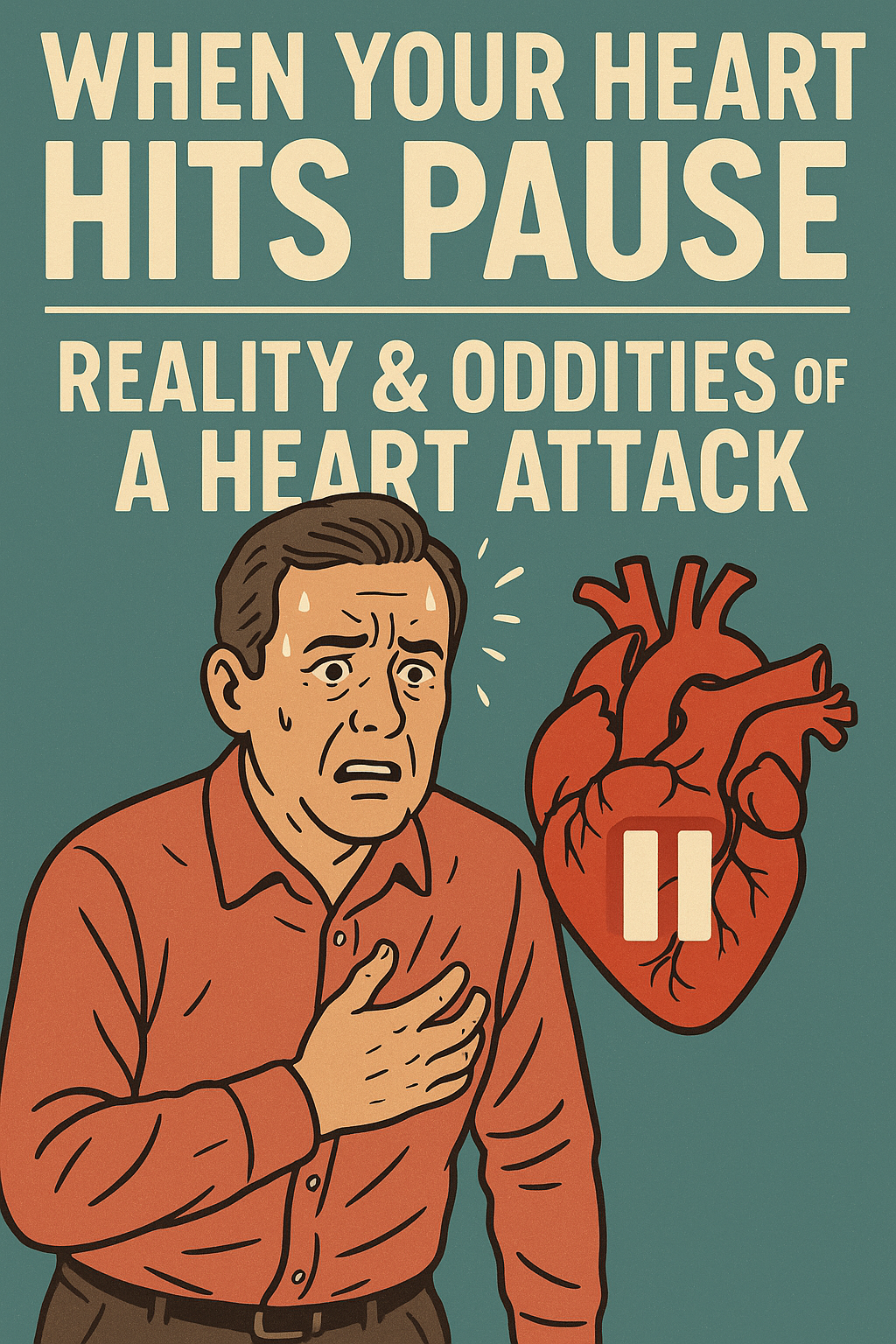
A Crisis in Your Chest: Breaking Down a Heart Attack in Real Time
It’s easy to imagine a heart attack as a sudden, dramatic event, but in reality, the crisis often begins quietly—deep inside your arteries. The most common cause is atherosclerosis, a process where fatty deposits called plaque slowly build up along the walls of your coronary arteries. Over years, this buildup narrows the arteries, creating a sort of arterial traffic jam. You might not even notice anything is wrong until the day the traffic comes to a screeching halt.
Plaque Buildup: The Silent Saboteur
Imagine your arteries as busy highways delivering oxygen-rich blood to your heart muscle cells—known as cardiomyocytes. Over time, coronary artery disease develops as plaque accumulates, quietly restricting the flow. Most days, this narrowed passage might not cause any obvious symptoms. But the real danger comes when this plaque suddenly ruptures.
Plaque Rupture: The Tipping Point
Let’s say you’re out playing soccer. Your heart is pumping faster, pushing more blood through your arteries. If a plaque is unstable, the increased force can cause it to rupture. When this happens, the body tries to “fix” the rupture by forming a blood clot (thrombus). Unfortunately, this clot can completely block the artery—cutting off blood flow downstream.
- Plaque rupture is the main trigger for most acute heart attacks.
- Once a clot forms, the heart muscle beyond the blockage is suddenly starved of oxygen.
- This is the beginning of a myocardial infarction—the medical term for a heart attack.
Oxygen Starvation: When Things Go South Fast
Without oxygen, heart muscle cells start to suffer almost immediately. Within 15-20 minutes, irreversible damage begins. In fact, during a severe heart attack, you can lose about 500 heart muscle cells per second—cells that can never be replaced. The longer the blockage lasts, the more heart muscle dies.
“These pain signals are basically telling the brain: Brain, we’ve got no oxygen down here…you need to do something about this now.”
Heart Attack Symptoms: Not Always What You Expect
Most people associate heart attacks with crushing chest pain. While chest pain is common, the reality is more complicated. The pain is a direct result of the heart muscle’s oxygen starvation. The starved cells send distress signals to the brain, but the brain doesn’t always interpret these signals as “heart pain.”
- Sometimes, the pain feels like severe indigestion, especially just below the heart and above the stomach.
- Other times, the pain radiates down the left arm, into the jaw, or even the back.
- Shortness of breath, dizziness, nausea, or cold sweats may also occur.
This phenomenon is called referred pain. The nerves that carry pain signals from the heart also serve other areas, so the brain can get confused. That’s why heart attack symptoms can masquerade as indigestion or arm pain, making it easy to miss the warning signs.
Chest Pain Causes: Why the Brain Gets Confused
When the heart muscle is deprived of oxygen, the pain signals it sends are not always clear or direct. The overlap of nerve pathways means that your brain might interpret the pain as coming from your stomach or arm rather than your chest. This is why some people delay seeking help, thinking it’s just heartburn or a pulled muscle.
Real-Time Damage: Every Minute Counts
Once the artery is blocked, the clock starts ticking. The longer the heart muscle goes without oxygen, the more damage occurs. That’s why recognizing heart attack symptoms—even the odd ones—is so critical. Minutes matter, and early action can save heart muscle and lives.
- Key takeaway: Not all heart attacks announce themselves with classic chest pain. If you feel sudden, unexplained discomfort in your chest, arm, jaw, or upper stomach—especially if it’s paired with shortness of breath or dizziness—don’t ignore it.
Understanding how atherosclerosis and plaque rupture set the stage for a heart attack helps explain why symptoms can be so varied and confusing. The crisis in your chest is a race against time, and knowing the signs could make all the difference.
What Happens to Your Heart (and Beyond): Cells, Signals, and Side Effects
When a heart attack—also known as a myocardial infarction—strikes, the damage doesn’t just stay in the heart. The effects ripple out, affecting everything from your brain’s signals to your ability to breathe. Let’s break down what’s really happening inside your chest and beyond, from the first moments of oxygen loss to the systemic side effects that can make a heart attack so dangerous.
Cardiomyocytes in Crisis: The First Few Minutes
Your heart is powered by specialized muscle cells called cardiomyocytes. These cells need a constant supply of oxygen-rich blood to keep beating in a coordinated rhythm. When a clot blocks a coronary artery, that flow stops, and the affected patch of heart muscle is suddenly starved of oxygen.
Without oxygen, cardiomyocytes can’t produce the energy they need. At first, they slow down. But within minutes, they start to die—a process known as cardiomyocyte death. This is why prompt treatment is absolutely critical. As one expert put it:
“You really want to limit the amount of cardiomyocyte loss that happens.”
Once these cells die, they can’t be replaced. The damage is permanent, and the heart’s ability to pump efficiently is compromised.
Signals Gone Haywire: Why Chest Pain Radiates
One of the classic chest pain causes during a heart attack is the brain’s confusion over pain signals. The nerves from your heart and your left arm share the same origin in the spinal cord. When the heart sends out distress signals, the brain often misinterprets them as coming from the arm, jaw, or even the back. This is called referred pain—and it’s why heart attack pain can show up in unexpected places.
Sometimes, this same mechanism causes people to feel indigestion or pain radiating up to the jaw. The brain, overloaded with pain signals it’s not used to, gets confused and sends the wrong message.
Adrenaline: The Double-Edged Sword
As the heart struggles, the brain reacts by flooding the body with stress hormones—especially adrenaline. This is the body’s emergency response, meant to help in a crisis. Adrenaline makes the heart beat faster and harder, trying to compensate for the failing patch of muscle.
But here’s the catch: adrenaline can’t fix the underlying problem. It does nothing to dissolve the clot, and the extra strain can actually make things worse. The heart races, but the blocked artery means oxygen still can’t reach the dying cells. The beat can even become irregular—a dangerous situation that can lead to arrhythmias or sudden cardiac arrest.
Cellular Breakdown: Troponin and Diagnosis
As oxygen deprivation continues, the membranes of starving cardiomyocytes break down. These ruptured cells leak their contents into the bloodstream, including a protein called troponin. Troponin is unique to heart muscle, so when doctors find elevated troponin heart attack levels in your blood, it’s a clear sign that heart muscle cells are dying.
This is why blood tests for troponin are so important in diagnosing a myocardial infarction. The more troponin, the more extensive the damage.
Collateral Damage: Heart Failure, Fluid in the Lungs, and Dizziness
The effects of a heart attack don’t stop at the heart. As more cardiomyocytes die, the heart’s pumping power drops. Blood can back up into the lungs, causing fluid buildup—a condition known as heart failure. This makes it hard to breathe, leading to shortness of breath (dyspnea).
- Fluid backs up into the lungs: You may feel like you can’t catch your breath, especially when lying down.
- Dizziness and disorientation: If the heart can’t pump enough blood to the brain, you might feel lightheaded or confused.
- Irregular heartbeat: The rest of the heart tries to compensate, sometimes beating faster or out of sync.
Within just 20 minutes of a blocked artery, irreparable damage can occur. About 500 cardiomyocytes can be lost every minute, and each one is gone for good.
These cascading effects—pain, hormone surges, fluid buildup, and cell death—are why recognizing and treating a heart attack quickly is so vital. The sooner the blockage is cleared, the more heart muscle (and life) can be saved.
Not All Heart Attacks Are Equal: The Two Faces of Myocardial Infarction
When we talk about a heart attack, or myocardial infarction, it’s easy to picture a single, dramatic event. But the reality is more complex. Not all heart attacks are created equal. In fact, there are two main types, each with its own personality and impact on the heart. Understanding these differences is crucial, not just for doctors, but for anyone who wants to grasp what’s really happening when the heart “hits pause.”
Let’s start with the basics. The heart is a muscular organ, and like any muscle, it needs a steady supply of blood and oxygen. This supply comes through the coronary arteries. When one of these arteries gets blocked—often due to coronary artery disease—the part of the heart muscle fed by that artery starts to die. But the extent and depth of this damage can vary, leading us to the two faces of myocardial infarction: transmural and subendocardial infarcts.
Transmural Infarct: The Full-Thickness Heart Attack
Imagine taking a cross-section of the heart, as if you sliced through it and looked at the inside. The heart wall is made up of several layers. When a major artery—like the left anterior descending artery—gets blocked, the result can be catastrophic. The blood supply to a large area of the heart wall is cut off, and the damage extends through the entire thickness of the wall. This is what we call a transmural infarct.
To put it simply, a transmural infarct is like taking a big chunk out of a brick wall. The damage isn’t just on the surface—it goes all the way through. As one expert put it,
“That’s how big the infarct is—transmural means it’s just crossing the entire wall.”
This type of heart attack is usually larger, more severe, and can lead to serious complications. The symptoms are often dramatic, and the risk to life is higher. Treatment needs to be aggressive and immediate, as the affected area of the heart is at risk of permanent loss of function.
Subendocardial Infarct: The Partial-Thickness Heart Attack
Not every heart attack is a full-scale assault on the heart wall. Sometimes, the blockage occurs in one of the smaller, penetrating arteries that branch off from the main vessels. These arteries supply blood to smaller, more localized areas of the heart muscle. When one of these gets blocked, the damage is limited to the inner layer of the heart wall, closest to the heart’s chambers. This is known as a subendocardial infarct or partial-thickness infarct.
If a transmural infarct is like losing a whole brick from the wall, a subendocardial infarct is more like developing cracks near the surface. The injury is smaller, but it’s still dangerous. The symptoms might be less dramatic, but the risk is real. These infarcts can be harder to detect, and sometimes the warning signs are subtle. However, they can still weaken the heart and increase the risk of future problems.
Why Location and Depth Matter
So, why does it matter whether a heart attack is transmural or subendocardial? The answer lies in both prognosis and treatment. Transmural infarcts, because they involve the entire thickness of the heart wall, are more likely to cause complications like heart failure, arrhythmias, or even rupture of the heart wall. They often require more intensive interventions and carry a higher risk of death.
Subendocardial infarcts, while generally smaller, aren’t benign. They can still impair the heart’s ability to pump blood effectively and may signal underlying, widespread coronary artery disease. Their management might differ, focusing on preventing further damage and addressing the root cause of the blockage.
Both types of heart attacks result from a lack of blood flow and oxygen to the heart muscle. But the depth and location of the damage—whether it’s a full-thickness transmural infarct or a partial-thickness subendocardial infarct—can shape everything from the symptoms you feel to the treatments you need and the outlook for your heart’s future.
In the end, not all heart attacks are equal. Understanding the two faces of myocardial infarction is key to recognizing the reality—and the oddities—of what happens when your heart hits pause.